Règlement FFPJP · 10 July 2026
Tie in points in a pétanque end: the official rule explained
Two boules at equal distance from the jack? Discover the three cases provided by article 28 of the official FFPJP rules and how to replay.1.A tie is not judged by eye
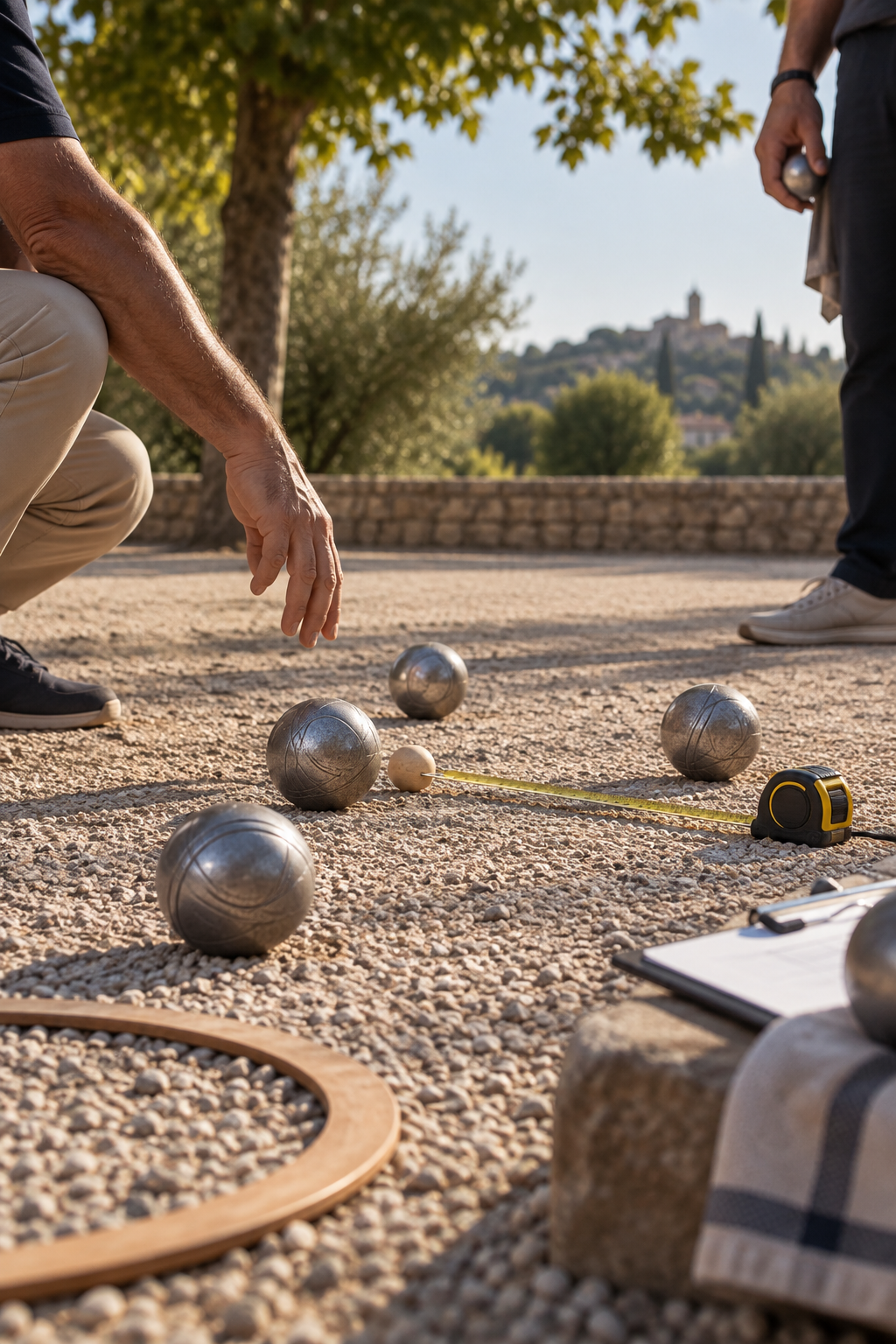
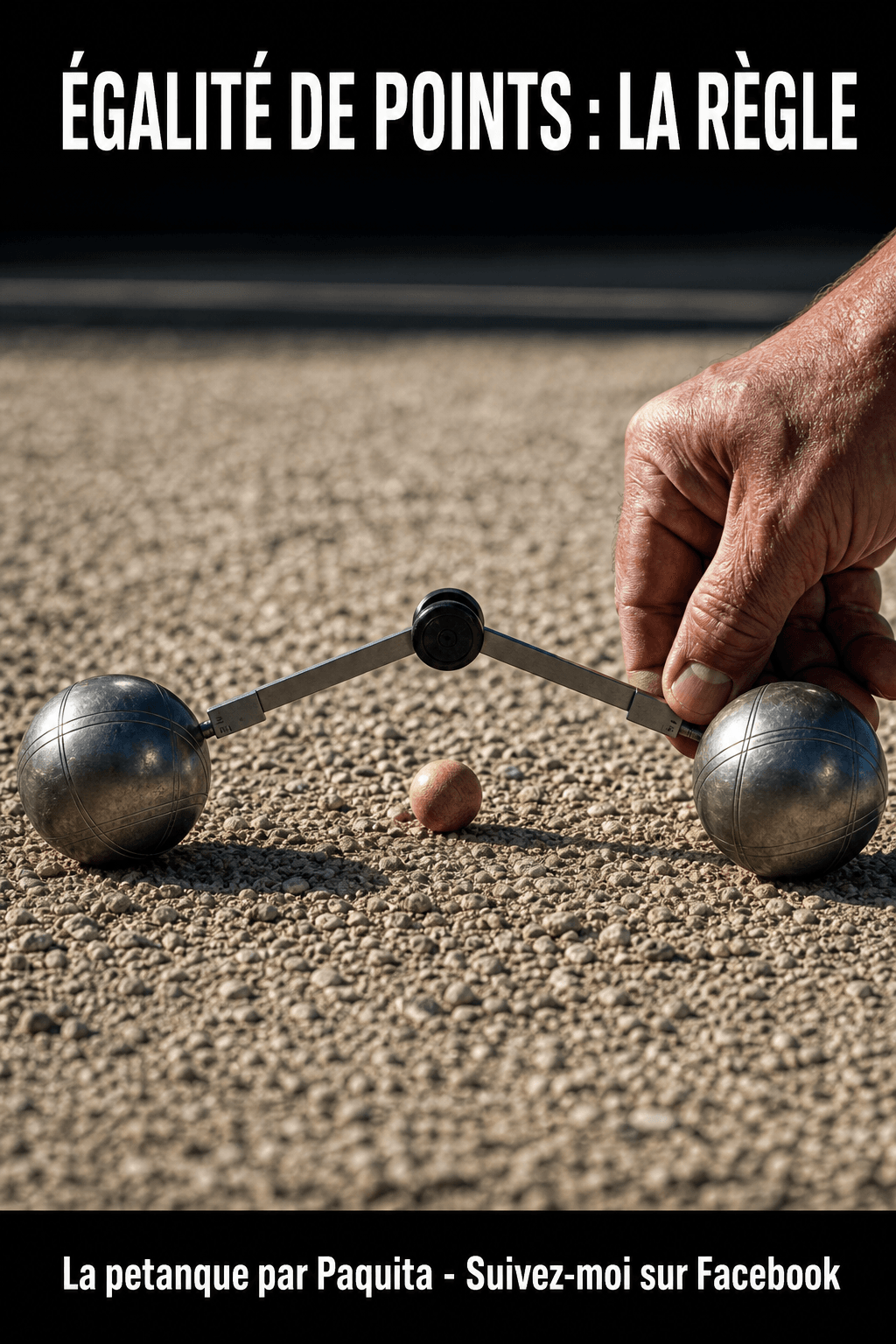
On a pétanque terrain, two bowls can look identical while one or two millimetres separate them. A tie in points must therefore only be announced after a serious measurement. The player who played the last bowl, or one of their partners, carries out the first measurement with a suitable instrument. The opposing team may measure in turn, and the umpire may be consulted at any time.
The reference point is the distance between each bowl and the jack. It's not enough for the bowls to be close to each other: they must be at an equal distance from the jack, and each belong to a different team. If both bowls are from the same team, there is no tie opposing the sides within the meaning of article 28.
2.Case 1: both teams have no bowls left
The end is over and the two closest bowls are at an equal distance. Since no one can take back the point, the end is null. Neither side scores a point. The jack belongs to the team that previously threw it, which determines who will throw it again at the next end.
This situation is rare but perfectly clear. The teams must not be separated by a second look, an estimate of the terrain or a fair-play rule invented on the spot. If the measurement confirms the tie and the bowl reserves are exhausted, the score doesn't change.
The three scenarios of article 28
3.Case 2: only one team still has bowls
If team A and team B have their closest bowls tied, but only team A still has bowls in hand, team A plays them. It then scores as many points as the bowls finally placed closer to the jack than the closest opposing bowl.
The wording is important: having bowls doesn't automatically give all the points. Each remaining bowl must be played and evaluated. A team can play a careful pointing shot, miss the point, then leave the score unchanged; it can also pull off two placements and turn the tie into a winning end. Shooting is not mandatory: the choice depends on position and risk.
Example: after the bowls have been played, one bowl from each team is tied. The red team keeps two bowls, the blue team keeps none. Red plays a first bowl that becomes closer: it takes one point. Its second bowl finishes behind the blue bowl: it takes no additional point. The end therefore yields one point to red, not two.
4.Case 3: both teams still have bowls
When each team still has bowls, it's the team that played the last bowl that plays first again. Then the other team plays in turn, and so on. This alternation continues until the point belongs to one side. The regulations don't require playing simultaneously or drawing lots.
Once a team takes the point, the usual logic resumes: the team without the point plays. If the tie persists after one bowl from each side, the alternation continues. As soon as a team is left alone with bowls, case 2 applies: it plays them and only counts those that finish in front of the best opposing bowl.
The mechanics of alternation
Imagine a tie at the end of a tense end:
5.How to count the points after the tie?
The count begins only once the situation has been decided. The team with the closest bowl scores one point for that bowl, then each additional bowl from the same team located in front of the best opposing bowl adds a point. Bowls behind this reference don't count.
| Measured situation | Provided outcome | End score |
|---|---|---|
| Tie, no bowls in hand | The end is stopped | 0 points |
| Tie, red alone to play | Red plays its bowls | Depending on final positions |
| Tie, two teams to play | Last team to have played starts again | After alternation |
| No bowls in authorised terrain | Application of the null point | 0 points |
You must also check that the bowls are still valid. A bowl that has fully passed into forbidden terrain doesn't count. If it comes back via a slope or an obstacle, it remains null and whatever it displaced must be put back in place according to the applicable rules. A tie measurement doesn't reinstate a bowl that's already null.
6.The umpire's role and the right actions
The umpire may be consulted before, during or after the measurements, but they must be called before picking up the bowls. A bowl removed before the points are counted is null and no subsequent claim can repair the error. So leave the position intact, mark it if necessary and measure methodically.
In a tournament, the captain or the player who threw the last bowl must calmly announce the measurement. The opponents have the right to check. It's not a lack of trust: it's the normal operation of a rule that sometimes decides by a few millimetres. A disputed measurement must be settled by the umpire, whose decision is final on the terrain.
When two bowls are tied, don't already prepare the next action. Mentally note who played the last bowl, count the remaining bowls of both teams and let the measurement be done. These three pieces of information give you the right article 28 scenario almost immediately.
The Guide Ultime du Point à la pétanque offers concrete methods to read distances, choose the trajectory and avoid random decisions.
FAQ — Tied bowls and points
Related articles
Reference: official FIPJP regulations, articles 25, 26, 27 and 28. The FIPJP indicates that no change to the playing regulations has been decided for 2026.