Règlement FFPJP · 10 July 2026
This rule about the boule stuck to the jack that every player should know
A boule touches or seems stuck to the jack? Here is what the FFPJP rulebook provides for the point, measuring, moving the jack, and special cases1.Is a bowl glued to the jack valid?
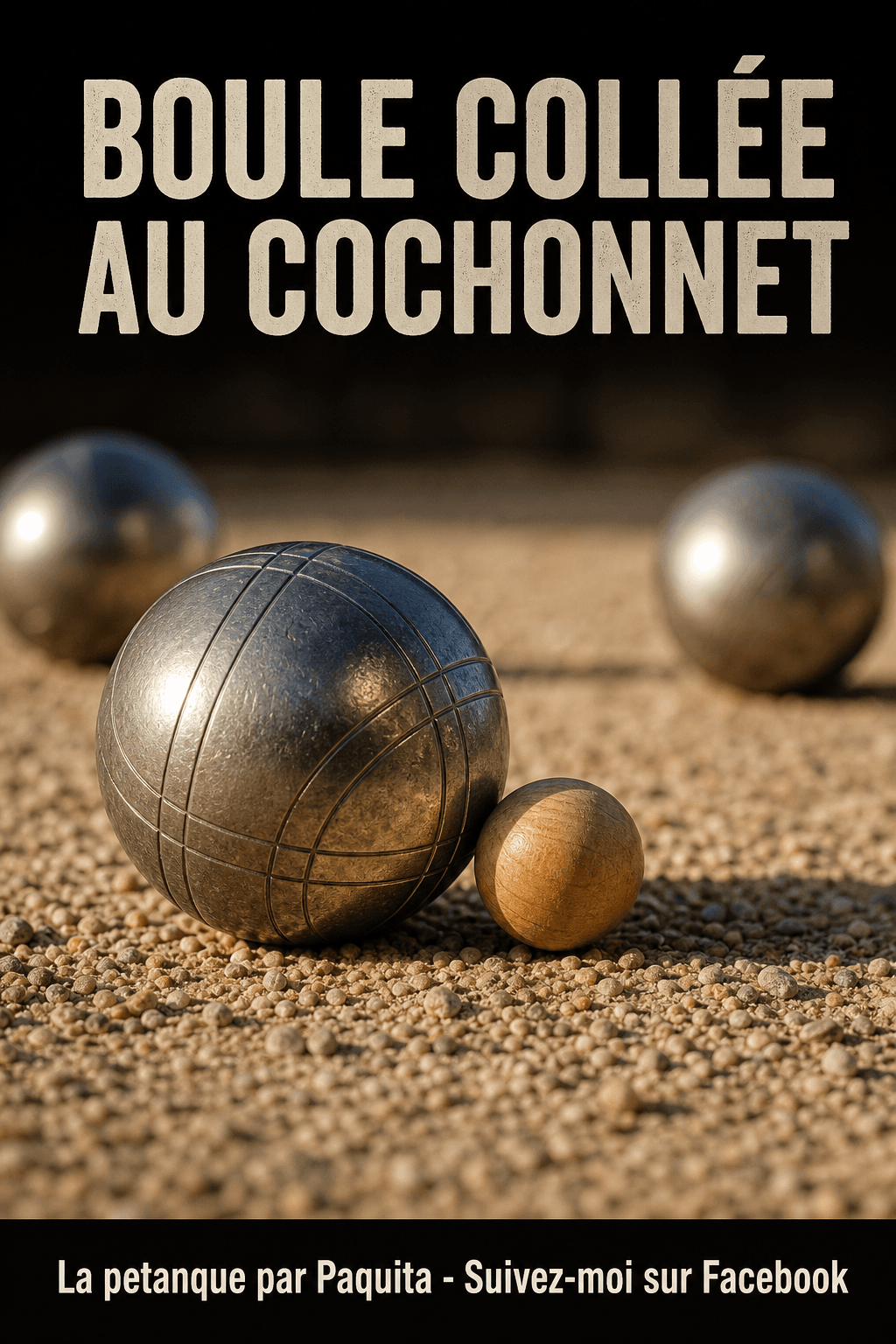
Yes. The rules provide no penalty because a bowl touches the jack. The point is judged by proximity: if this bowl is the closest to the jack at the end of the end, it can win the point and any additional points. The word "glued" describes a position, not a special category of bowl.
Contact can be obtained by an appoint, a shot that moves several objects or an indirect impact. If the bowl and the jack have been moved by a bowl played in the game, their new position is valid. The jack is not put back to its original place on the pretext that the impact was spectacular.
2.How to measure a bowl that touches the jack
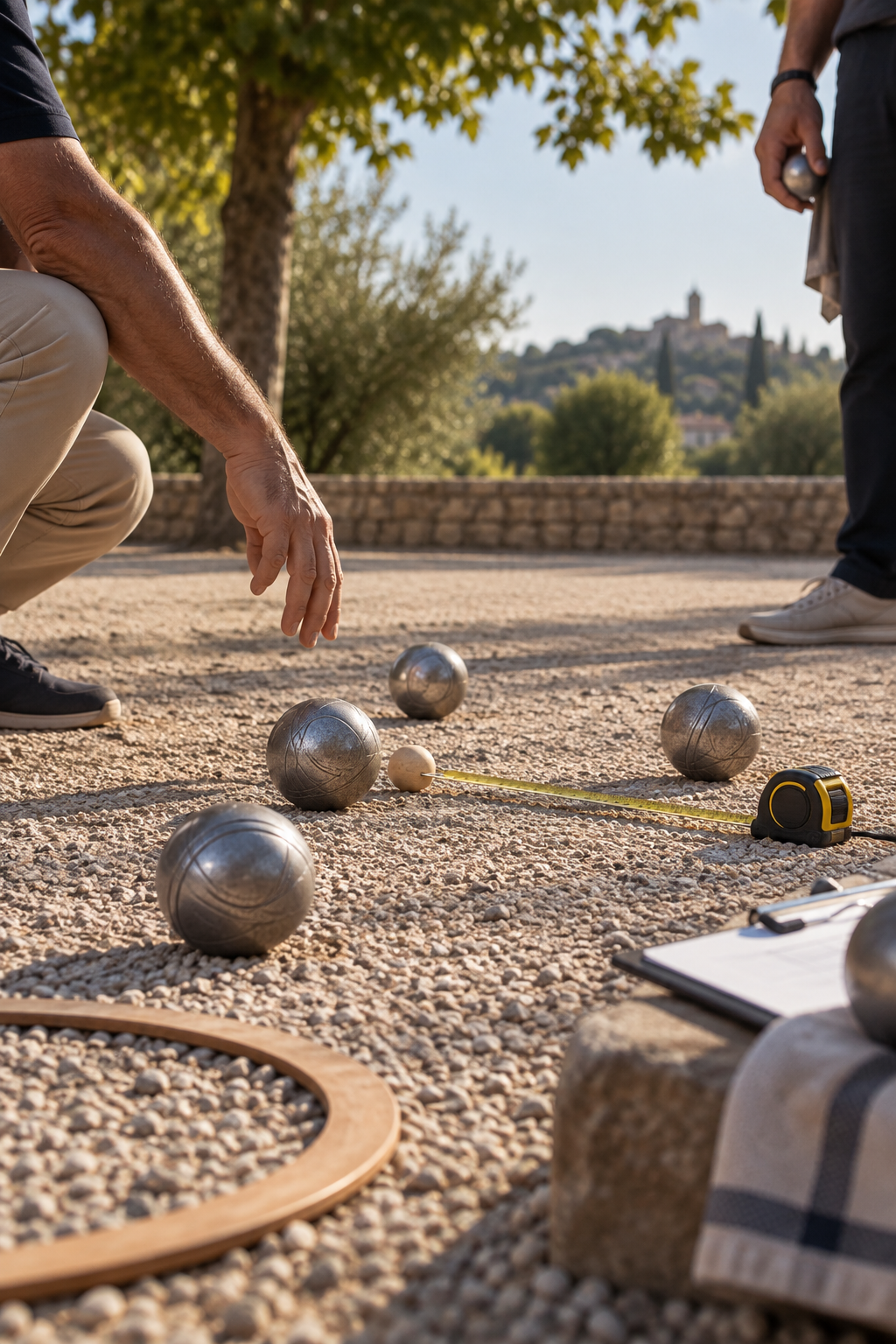
Measuring a point falls to the player who played last, or to one of their teammates. The opponent may then check and the umpire may be consulted. For a bowl in direct contact, the distance is read with the appropriate instrument, taking into account the actual position of the bowl and the jack; the two objects are not separated to "see better".
Before measuring, any trace of mud or any foreign object clinging to the bowl or jack is removed. A small stuck stone, a damp clod or a leaf in the way can skew the result. The rules clearly distinguish this foreign object from the terrain: what clings to the objects is removed, but the ground around them is not altered.
If a removable obstacle lies between the jack and the bowl, it may be moved temporarily after marking the positions. It must be put back afterwards. If the obstacle cannot be removed, calipers allow measuring without moving the bowl or the jack.
What you may do, and what is forbidden
3.What if the glued bowl has moved the jack?
Displacement by a bowl played in this game is valid. The bowl and the jack may therefore stay side by side at their new place. The next player must play according to this position, as for any moved jack. Once the bowl has stopped, no one may push it, separate it or replace it.
The situation is different if the displacement comes from the wind, a spectator, an animal, an umpire or a moving object. When the original position has been marked, the jack or the bowl is put back to its place. Marking protects the teams: without a mark, the umpire cannot reconstruct a position merely claimed after the fact.
If a bowl from the game pushes the jack out of the dead ground, the rules of the dead jack apply. Bowl-to-jack contact therefore does not prevent a dead ball: it is the final position and the cause of the displacement that matter.
4.Near a string, a wall or the edge
A bowl glued to the jack may be near an obstacle without being dead. The rules impose a distance of one metre for the initial throw of the jack and the circle, but a shot or an appoint may then bring the jack closer to an obstacle. This constraint is not reapplied at every impact of the end.
On the other hand, the terrain boundaries must be checked. A bowl straddling a valid line is good; it becomes dead when it has entirely crossed the perpendicular of the boundary. For a jack, a displacement into dead ground may render the jack dead, even if it then returns to valid terrain. A side string does not always have the same status as a dead-ball line: the tournament organisation must be consulted.
Assess the situation before touching anything
5.Mud, stone and foreign object: the detail that skews the point
The rules require removing any foreign object that clings to the bowl or jack before measuring. This is particularly important with a glued bowl: a small clod of earth between the two surfaces can give the impression of a different contact and alter the distance. What clings is gently cleaned; the objects are not moved.
A clinging foreign object must not be confused with an irregularity of the terrain. A piece of gravel under the bowl is part of the playing situation. A fixed obstacle between the jack and the bowl cannot be removed like a leaf; calipers are then used. The correct gesture protects both the measurement and the integrity of the terrain.
| Observation | Rule to apply | Throwing motion |
|---|---|---|
| Bowl in contact with the jack | Position valid if valid terrain | Measure without separating |
| Mud or stuck leaf | Foreign object to remove | Clean before measuring |
| Fixed obstacle between the objects | Do not remove it | Measure with calipers |
| Jack moved by a played bowl | New position valid | Continue the end |
6.The practical method in a tournament
When a bowl touches the jack, the best attitude is to slow down. The player who just threw indicates the position, the opponents observe, then it is decided whether measuring is necessary. No bowl is picked up before the end of the end and no fingers are placed on the jack to check contact.
If the point is disputed, the jack and the bowls are marked before any complex measurement. Clinging foreign objects are removed, only authorised removable obstacles are cleared, and the umpire is called if the terrain boundary or the status of a string is debated. Once the point is decided, play resumes with the validated position.
This discipline avoids a common mistake: wanting to "fix" the terrain because a glued bowl seems impossible to measure. The rules precisely provide the suitable instrument and the umpire's intervention. Technical difficulty does not give players the right to alter the scene.
A bowl glued to the jack is often excellent news, but only if you leave it alone. Mark, clean what clings, measure cleanly and check the boundary. The finest point can be lost by a finger placed too early on the jack.
The Ultimate Shooting Guide explains how to read the targets, the risks of displacement and the choices that win a tight end.
FAQ — Bowl glued to the jack
Related articles
Reference: official FIPJP regulations, articles 11, 18, 21, 24, 25, 27 and 29. The FIPJP indicates that no change to the playing rules has been decided for 2026.