Règlement FFPJP · 20 July 2026
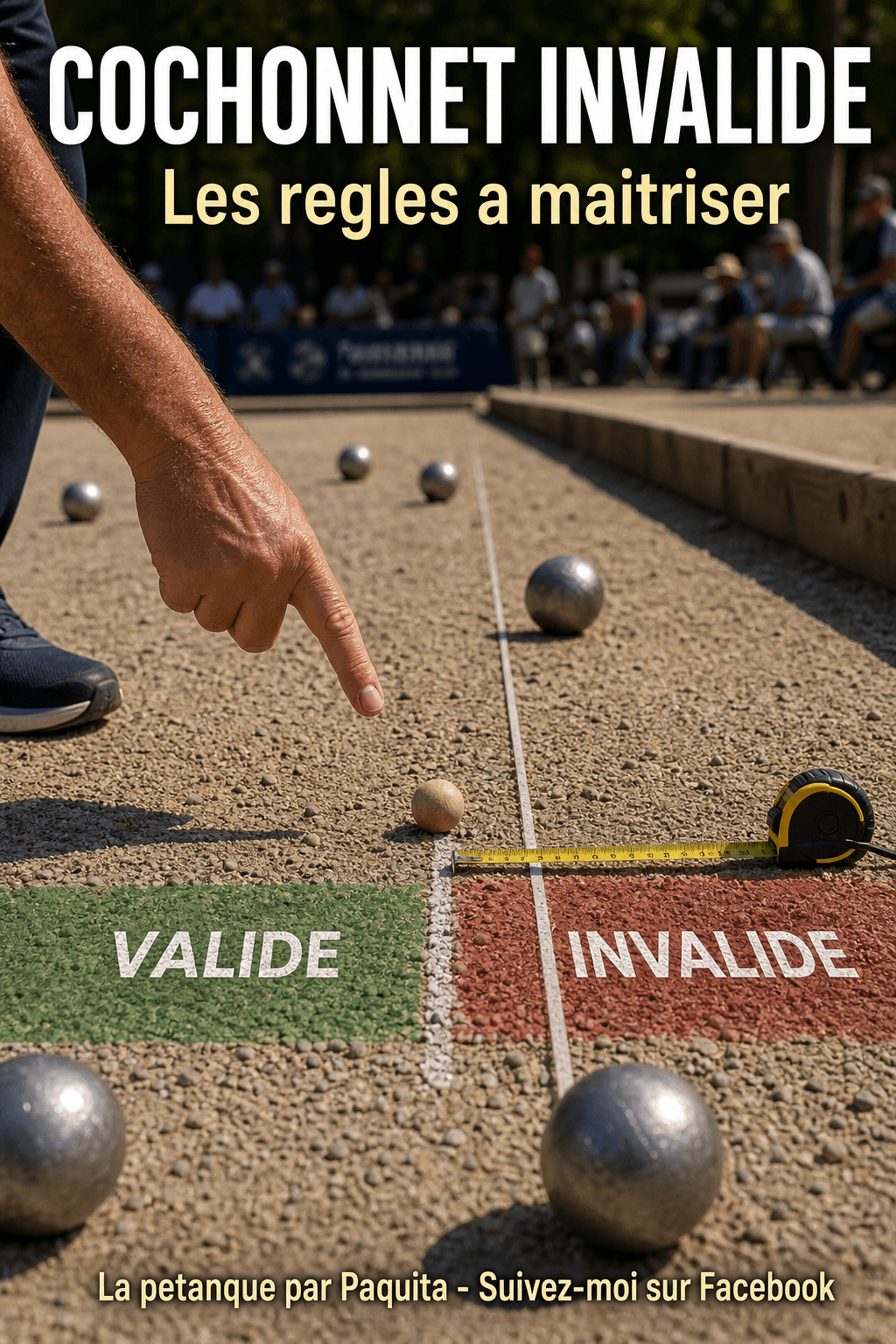
These rules on the invalid jack that every petanque player should master
Invalid jack, dead jack, distance, obstacle, boundaries: the FFPJP rules to know to avoid disputes in petanque.1.A valid jack must be playable
The validity of the jack does not come down to its distance. The target must be thrown into an authorized zone, visible, sufficiently far from certain obstacles and placed in a way that allows the end to proceed normally. If a condition is missing, the throw can be declared invalid.
The principle is simple: the jack must create an even end. A jack hidden against an edge, blocked by an obstacle or thrown out of range turns the game into a lottery or an artificial advantage. The rules prevent this by setting criteria.
To remember: before playing the first boule, both teams must be able to confirm that the jack is valid. After that, discussions become much more complicated.
2.Distance too short or too long
The best-known case remains the wrong distance. Among seniors, a range of 6 to 10 metres is classically retained. A throw that is too short or too long must be signaled before the first boule. If no one reacts and play begins, the situation can become more delicate depending on the circumstances.
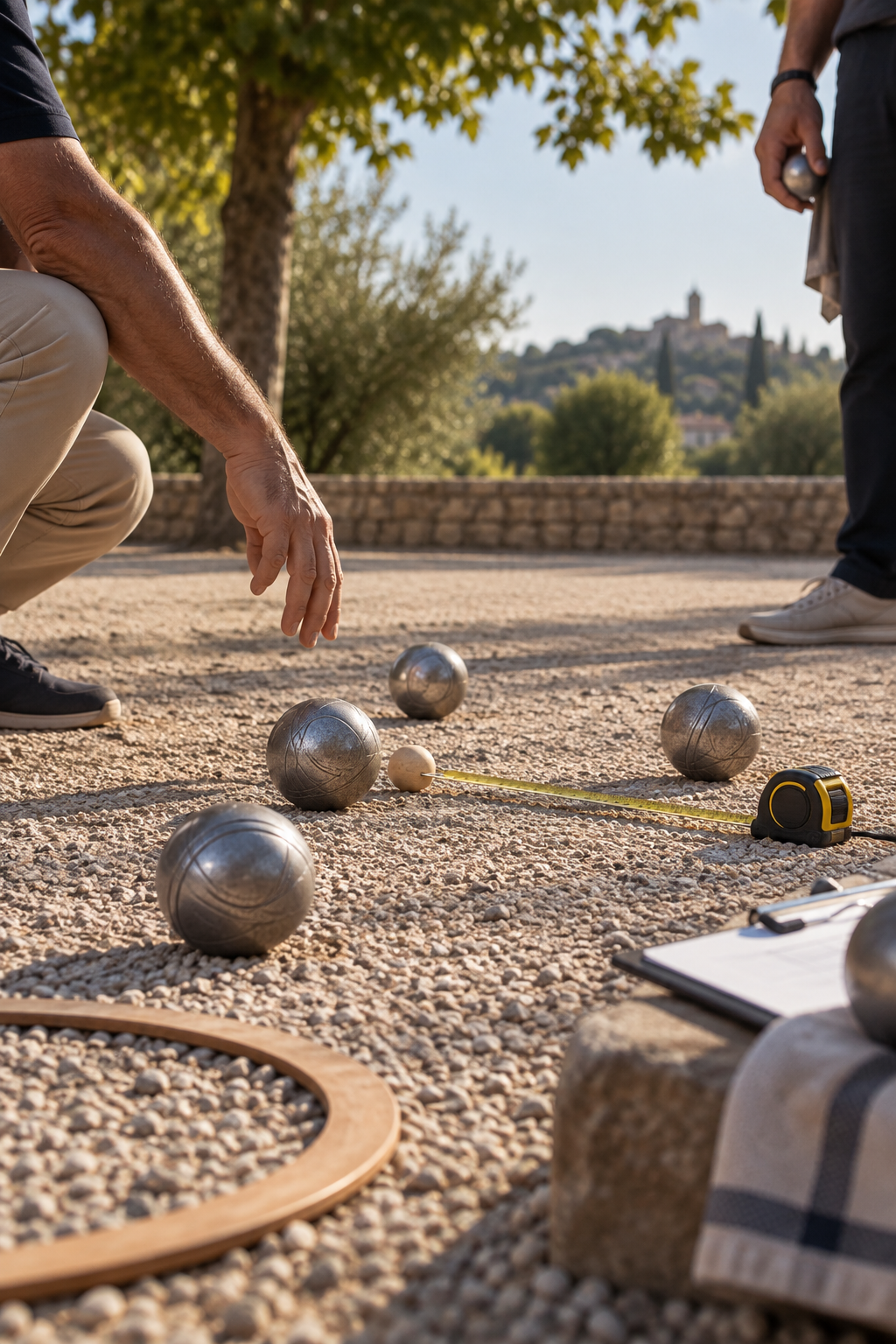
The measurement must be done cleanly. You do not judge by eye when the doubt is real. A tape measure, a common estimate or the umpire make it possible to avoid the phrase that poisons the terrains: "I'm telling you it's in".
3.Obstacle, boundary and unplayable jack
A jack can be at a good distance yet still problematic. If it is too close to a boundary, against an obstacle, in a forbidden zone or abnormally hidden, it may not allow a regular end. Official terrains sometimes have lines, strings, frames or natural obstacles that require careful checking.
The beginner only looks at the distance. The experienced player also looks at the jack's surroundings: can you point normally? Is the jack visible from the circle? Is there enough space around? Can a boule be played without danger or absurdity?
| Case | Risk | Reflex |
|---|---|---|
| Too close to a boundary | Debatable jack | Check before the boule |
| Hidden by an obstacle | Impossible play | Request umpire's opinion |
| Out of frame | Jack dead | Resume the procedure |
4.When the jack goes out during an end
Another tricky case: the jack was valid at the start, then it goes out or becomes dead after being hit by a boule. What happens next depends on the boules still to be played by each team. It is often the rule that catches people out, because the point is not always decided the way players imagine.
To avoid mistakes, you need to count the boules left in hand and identify whether a single team can still play. The situation is not about perceived fairness, but about procedure. That's why articles on the out-of-play jack deserve to be read before they are suffered.
As soon as the jack moves toward a limit, mentally and physically mark its position if the rule requires it. A small clear mark is worth more than five minutes of approximate memory.
5.Mark the jack to be able to replace it
Marking the jack is a simple gesture that many forget. Yet it becomes essential when the jack is accidentally moved by a player, a referee, an animal, an object or a boule coming from another terrain. Without a mark, replacing it exactly becomes almost impossible.
Marking doesn't mean modifying the terrain. It's a discreet marker, useful and in keeping with the spirit of the game. Players who do it regularly avoid a large part of accidental disputes.
6.The right procedure when doubt appears
When doubt appears, you have to act before the next throw. You stop calmly, you identify the problem, you measure or you call the umpire. The worst choice is to continue "to see" then come back to the validity three boules later. The further the game goes, the more fragile going back becomes.
A good competition player is not afraid of procedure. He uses it to keep the game clean. It doesn't slow play down; on the contrary, it avoids long disputes and decisions made under tension.
The key moment: before the first boule
Checking the jack must be done right away. If the distance, visibility or proximity to a boundary raises a question, you say it before the first boule is played. After the end has started, each boule adds a consequence and makes the debate more confusing. This discipline avoids bad faith, but also sincere errors.
In a team, it's useful to designate one person to check the jack without aggression. This can be the pointer, often the most attentive to distance and to the situation. The aim isn't to look for the opponent's fault, but to start each end on a clean basis: a valid jack, a clear circle, a game that can be played.
Boundaries, uneven terrains, obstacles and tricky situations: this guide helps keep good reflexes when the end becomes less straightforward.
Discover