Règlement FFPJP · 10 July 2026
Jack pushed off the court by a boule: the official rule that surprises everyone
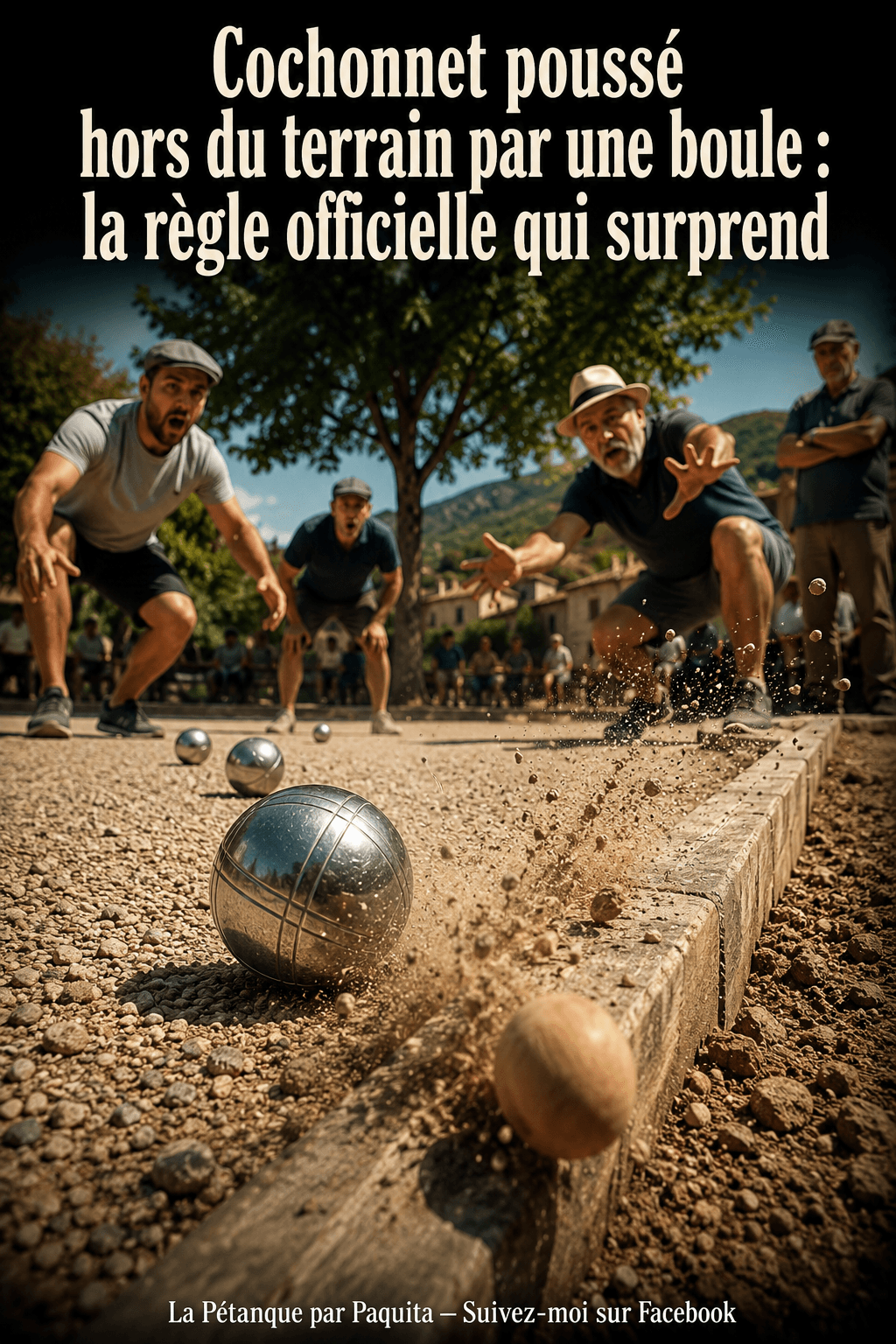
A boule that pushes the jack off the court: the scene is common in competitions, but what does the FFPJP rulebook really say in this specific case? The answer surprises many players.1.The principle: a bowl shot remains a valid shot
First thing to understand: sending the jack out of the terrain with a powerful shot is not a fault. It's a perfectly valid shot, often intentional in fact, when a team is precisely trying to knock out a jack that's too favorable to the opponent. The rules never penalize a player for shooting 'too well'.
What changes on the other hand is the fate of the end — and there, everything depends on the moment the incident occurs.
Remember this simple rule: as soon as at least one bowl from each team has been played in the end, knocking the jack out no longer cancels it — it ends and is scored normally, on the bowls already in play.
2.Case n°1 — the jack goes out on the very first throw
If the jack is propelled out of the terrain by a bowl before any other bowl has been played in the end (typically a very early shot on a poorly protected jack), the end is dead. You simply re-throw the jack, and the end starts again from the same circle, with no one scoring a point.
3.Case n°2 — the jack goes out mid-end, after bowls have been played
This is the most frequent and most misunderstood case. If bowls have already been placed by both teams around the jack, and a later shot sends it out of bounds, the end stops immediately and is scored with the bowls already present on the terrain at the moment of exit.
In other words: the team that was leading at the exact moment the jack went out wins the points corresponding to its advantage at that instant. The bowls that haven't been played yet are simply no longer used.
It's precisely this point that makes the difference between experienced and beginner teams: a well-judged shot on the jack, at the right moment, can permanently secure a winning end, without giving the opponent the chance to replay their last bowls. A real tactical shot, not luck.
4.How is the end then scored?
The scoring follows exactly the same rules as a normal end: you compare the bowls still in play and award one point per bowl of the leading team, closer to the last known position of the jack before it went out. Unplayed bowls change nothing to the result, since they were never thrown.
5.What the rule means by 'out of the terrain'
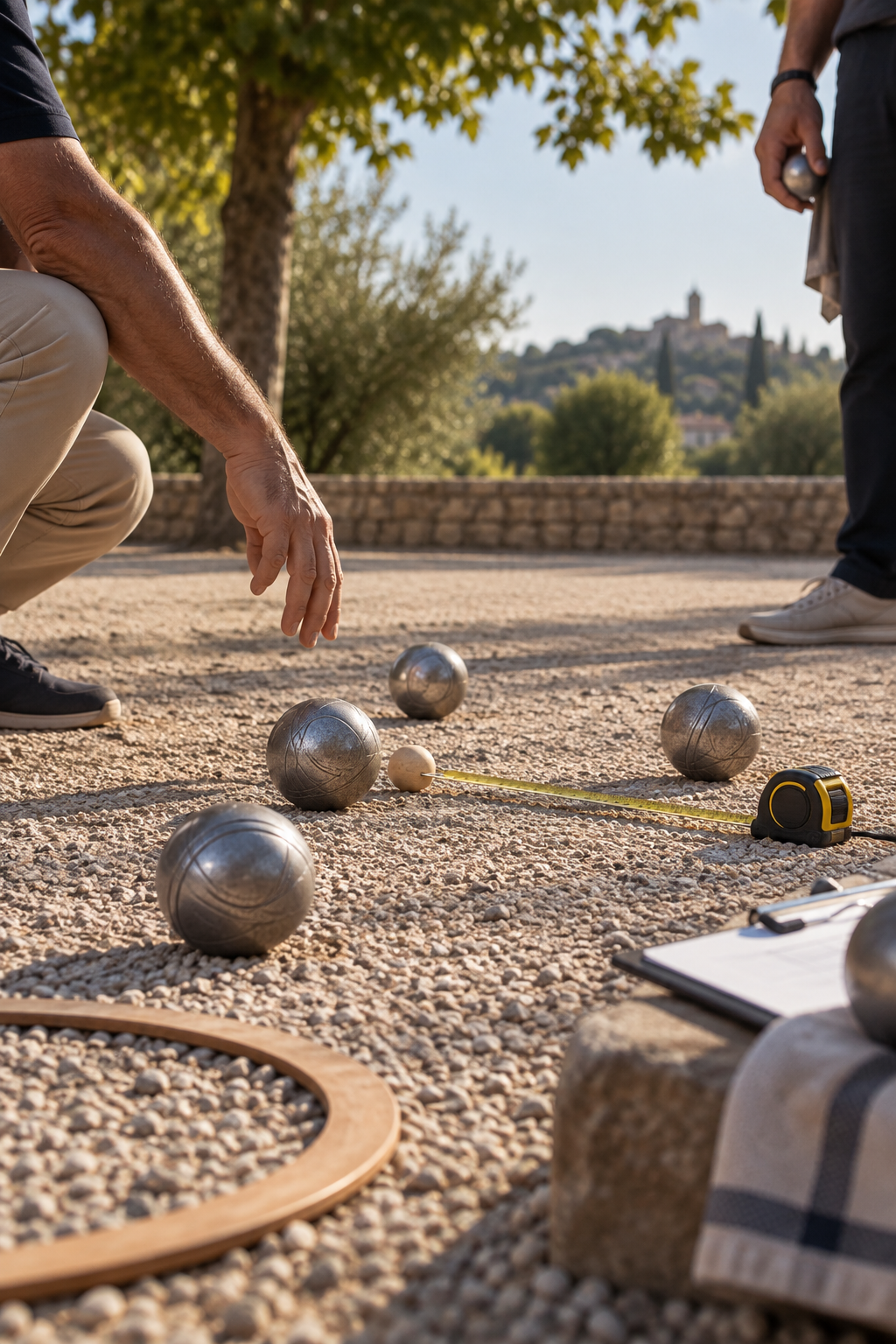
The playing terrain, in an official tournament, is clearly marked out (pegs, strings, markings). A jack is considered 'out' as soon as it fully crosses this boundary. In a free game without strict marking, both teams must agree beforehand on what counts as a valid exit, ideally before the start of the game to avoid any last-minute dispute.
6.Common misconception vs real rule: the gap in figures
Many club players still think that knocking the jack out systematically cancels the end. Here's the gap between this widespread belief and the actual application of the rule:
| Situation | What the rules say | Wrong common misconception |
|---|---|---|
| Jack out on the 1st throw | Dead end, we re-throw | Automatic point to the shooter |
| Jack out mid-end | End scored on the bowls in play | End always cancelled |
| Intentional shot on the jack | Valid shot, no penalty | Shot deemed 'unsporting' |
7.The reflex to have on the terrain
Faced with a jack that's gone out, the first question to ask is simple: 'have bowls already been played in this end, by both teams?' The answer determines everything. In case of persistent doubt in an official tournament, the umpire is the only one authorized to decide.
To go deeper into the situations related to the jack and its boundaries, check out our lesser-known rules of pétanque as well as our free tools to train yourself on these special cases.
Rough terrain, a misbehaving jack, borderline situations: this guide helps you keep control of the game whatever the context, including the most destabilizing terrain incidents.
📗 Discover the book