Actualités · 12 March 2026
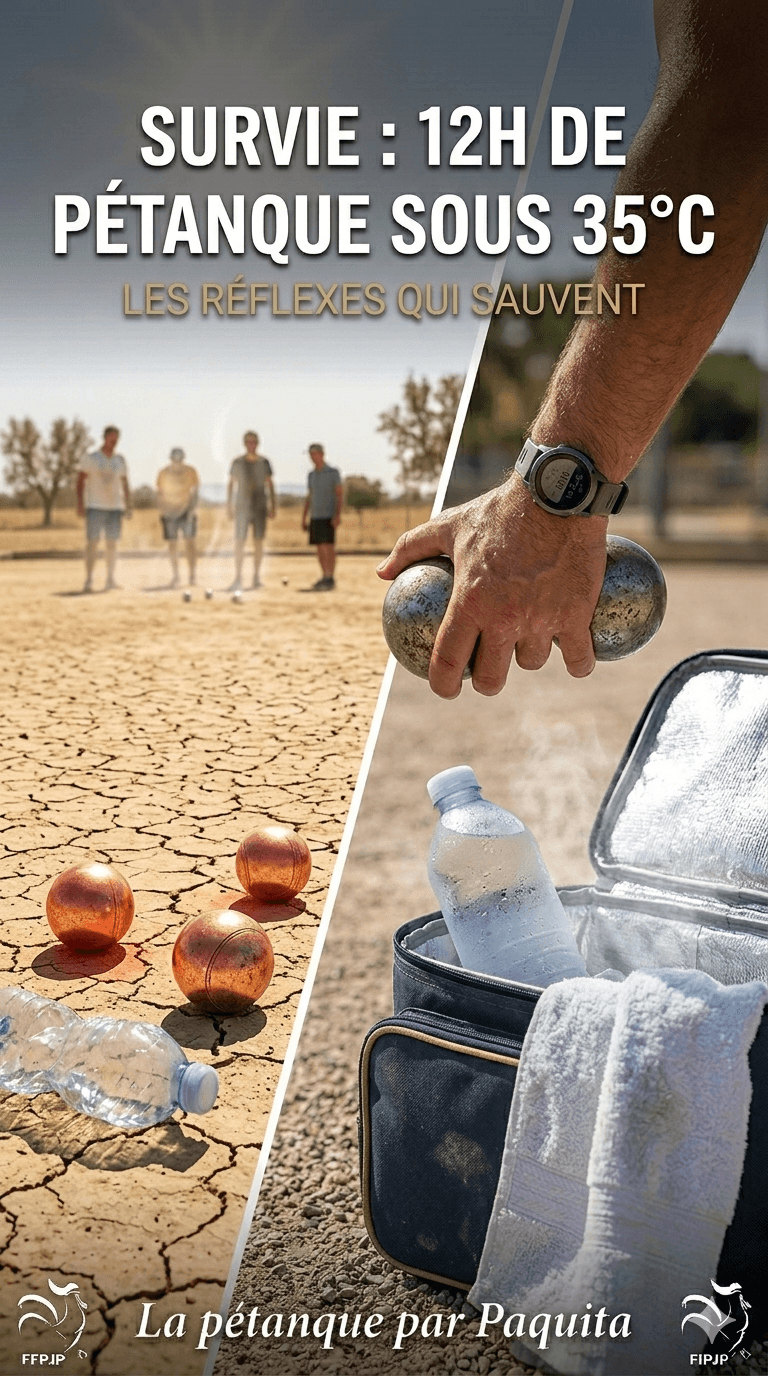
Survival: How to handle a 12-hour competition in 35°C heat
Hydration, nutrition, sun protection, mental management... Paquita gives you the complete survival guide to last 12 hours on a pétanque terrain in a heatwave.The danger thermometer
Not all heat is equal. But on an open-air pétanque ground, exposure is at its maximum: ground reflecting heat upward, metal boules heating up in your hand, no shade between ends. The perceived temperature is systematically higher than the shaded temperature.
🌡️ IMPACT ON PLAY AND HEALTH BY TEMPERATURE 25°C Normal conditions No particular impact 28°C Watch hydration Drink every 20 min 32°C Vigilance zone Protection mandatory 35°C Real danger zone Full protocol required 38°C+ Heatwave — vital risk Stop if organiser inactive 🌡️At 35°C ambient, the white gravel ground reaches 45 to 50°C at the surface. Heat rises from bottom to top in addition to coming down from the sun. The pétanque player is literally caught in a thermal sandwich. That's why heatstroke symptoms arrive faster than you'd anticipate.
Hydration: survival rule no.1
It's the simplest and most often neglected rule. Dehydration alters concentration, motor precision and emotion management — the three pillars of good play — well before it triggers visible physical symptoms.
🎙️ Paquita on the subject “I lost a final because my pointer, in the ninth end, could no longer judge distances correctly. He'd had two glasses of water all day. Two. For 11 hours of sun. We won the last end but we were both in a state... let's say, approximate. Since then, the water bottle is part of the team's mandatory equipment.” — Paquita, a lesson learned the hard way- 💧Start drinking before you're thirsty — the sensation of thirst appears when dehydration is already at 1–2%. By then, the precision of your throwing motion is already affected. Drink preventively, not curatively.
- ⏱️One glass every 20 minutes — without waiting. Not one big glass at once — small regular sips. The stomach absorbs fractional intake better than large gulps.
- 🧂Add electrolytes after 3 hours — water alone isn't enough after several hours of sweating. A pinch of salt and a banana every 3 hours, or a sachet of electrolytes in your bottle. Otherwise risk of hyponatraemia (excess water without salt).
- 🚫Avoid drinks that dehydrate — coffee, alcohol, very sugary sodas accelerate water loss. A beer doesn't hydrate, it slightly dehydrates. Save that for afterwards.
- 🌡️Cool water, not iced — water that's too cold creates thermal shock and can cause stomach cramps. Between 12°C and 16°C is ideal. An insulated bottle keeps this temperature for several hours.
| Drink | Hydration | Over 12h of competition | Verdict |
|---|---|---|---|
| Still or lightly mineralised water | Optimal | 3 litres minimum | ✓ Ideal |
| Water + electrolytes (salt, magnesium) | Excellent after 3h | From midday | ✓ Recommended |
| Sparkling water | Good | Can bloat — alternate | ⚠ In moderation |
| Unsweetened fruit juice | Fair | Useful sugar intake in the middle of the day | ⚠ Dilute if too sweet |
| Coffee / tea | Mild diuretic effect | 1 max in the morning, none in the afternoon | ⚠ Limit |
| Alcohol | Dehydrating | To avoid during the competition | ✗ Only afterwards |
| Very sugary sodas | Poor | Glycaemic spike then crash | ✗ To avoid |
Nutrition: what to eat (and what to avoid)
The nutrition for a 12-hour competition isn't that of an office day. The goal is to maintain a stable energy level throughout the day, without the glycaemic spikes and crashes that sabotage concentration from 3pm.
🍌 Banana — your no.1 allyAnti-cramp potassium, slow sugars, easy digestion, easy to carry. Eat a banana every 3-4 hours. It's the competition food par excellence.
🥜 Dried fruit and nutsDense and lasting energy, magnesium, easy to snack on between ends. Almonds, cashews, dried apricots: within reach in your bag.
🧀 Light sandwich at lunchNo heavy meal at noon — it weighs you down and diverts blood to digestion. A ham, fresh cheese or tuna sandwich, no greasy sauce.
🍫 Dark chocolate (not milk)Magnesium, quick energy if you flag, and a useful psychological pleasure. Avoid milk chocolate, which melts in the heat and produces a short glycaemic spike.
🍉 Fresh fruit / Watermelon90% water, natural sugars, a refreshing effect. Watermelon is the perfect anti-heatwave snack — it hydrates and feeds you at the same time.
🥖 Cereal barsPractical and non-perishable in the heat (unlike sandwiches). Choose oat-based or whole-grain bars, not too sweet.
⛔ The food traps of a summer competitionThe big lunch at the restaurant with the opposing team's mates — full main course, cheese and dessert — is your worst enemy at 3pm. Digestion monopolises blood flow and leaves you in a drowsy state precisely when the most important games begin. Eat light at noon and make up for it with regular snacks throughout the day.
Body protection: sun, heat, circulation
🧴 SPF50+ sunscreenApply at the start, then every 2 hours. Don't forget the ears, the back of the neck, the hands (in constant contact with the metal boules) and the lips.
🧢 Headwear mandatoryWide-brimmed hat, bucket hat or cap with neck protection. The head is the fastest overheating point. A light straw hat is more effective than a thick fabric cap.
👕 Light-coloured, breathable clothingWhite or light colours that reflect the heat. Linen or light cotton, no synthetics that create a thermal greenhouse against the skin. Light sleeves rather than bare arms (sun protection).
❄️ Mist spray or cold towelA mist spray on the face and back of the neck drops the perceived temperature by 2 to 3°C instantly. A cold damp towel on the back of the neck during breaks: an immediate effect on lucidity.
🦶 Suitable shoes and socksThe ground at 48°C rises into your feet. Shoes with a thick insulating sole, breathable technical socks. Hot feet accelerate the rise in temperature of your whole body.
🌳 Seek shade between endsEven 3 minutes in the shade between two games makes a measurable difference. Don't stand in the sun “to watch” when you're not playing. The shade is your recovery zone.
🧊 The cold-boules trickKeep your boules in the bag or in the shade between ends rather than in your hand or in the sun. Boules at 60°C in your hand disrupt the tactile feel of the throw and burn your skin over long games. The closed bag keeps the boules at a bearable temperature.
Mental management: keeping your head when your body overheats
The body suffers — that's well known. But heat also attacks the head: irritability, impatience, hasty decisions, conflicts within the team... These are signs of dehydration and mental as well as physical overheating.
- 🧠Accept that your play will be less precise late in the day — everyone is in the same state at 5pm. The one who wins is the one who best manages the shared fatigue. Lower your standards for yourself and your partners after the 8th hour.
- 🔇Reduce exchanges during ends — heat amplifies tension. What would be an innocuous comment at 20°C can become an argument at 35°C. Talk less, play more. Post-end analysis: afterwards, not during.
- ⏸️Use timeouts — between games, isolate yourself for 5 minutes if necessary. Non-stop social continuity for 12 hours is mentally exhausting. A player who closes his eyes for 5 minutes in the shade is not lazy, he is preparing for the next one.
- 🎯Simplify your play intentions late in the day — when fatigue sets in, complex shots miss. Go back to fundamentals: point behind, tight shooting. Avoid the bold plays you'd attempt fresh and ready at 9am.
- 🤝Keep an eye on your partner's state — heat makes self-assessment difficult. Watch the others: excessive redness, a blurry look, unusual irritability are warning signs. Proactively offer water and shade.
The day hour by hour: the survival programme
7:30am 🌅 Before departure — home preparation Full breakfast (don't skip the meal). Apply sunscreen before leaving — it takes 20 minutes to take effect. 1.5L bottle filled. Bag checked: hat, mist spray, snacks, electrolytes. Prepare the body 8:30am 🎯 Arrival at the boulodrome — recon Identify the available shade spots. Locate the water points or fountains. Place the cool box or bag in the shade. Drink a large glass before the first game. Preventive hydration 10am ☀️ Morning — rising heat Reapply sunscreen if the first application is more than 2h old. One glass of water every 20 minutes. Banana or dried fruit as a snack. Hat at all times. Active protection 12:30pm 🍽️ Lunch break — the critical moment A LIGHT meal, obligatorily. Sandwich, salad, nothing hot or heavy. No alcohol. Stay in the shade for the break. Reapply sunscreen. Drink 500 ml of water with a pinch of salt or a sachet of electrolytes. Digestive danger zone 2pm-4pm 🔥 Heat peak — maximum vigilance The most dangerous hours. Mist spray in action between each end. Cold towel on the back of the neck during breaks. Reduce any needless energy expenditure (don't run, don't stand in the sun unnecessarily). Hydration every 15 minutes. Thermal peak 4:30pm 🍫 Fatigue dip — emergency refuelling The hour when unprepared teams start to collapse. Dark chocolate + banana + water + 5 minutes in the shade = partial but real recovery. That's where your preparation makes the difference over the opponent. Key refuelling 6pm-8pm 🏆 Final — the heat drops, you're still here The temperature comes down slightly. You held on where others gave in to fatigue or heat. Maintain hydration, even if it's easier. Keep your concentration: this is when your preparation pays off. Final concentrationThe ideal survival bag
✅ Must-haves- Insulated bottle, 1.5L minimum
- Wide-brimmed hat or bucket hat
- SPF50+ sunscreen (reapplication)
- Mist spray or small cold towel
- Bananas (2 to 3 for the day)
- Dried fruit / nuts in a small bag
- Cereal bars (at least 2)
- Electrolyte sachets or salt-magnesium tablets
- Dark chocolate (small size)
- Paracetamol / ibuprofen (if tolerated)
- Small first-aid kit (plasters, etc.)
- Uninsulated water bottle that heats up
- Cans of sugary soda
- Crisps and very salty, dry snacks
- Full meal in a Tupperware (unrefrigerated)
- Energy drinks (glycaemic spike + crash)
- Dark synthetic clothing
- Light shoes like sandals (burning ground)
- Cap with no neck protection
- Alcohol “for Dutch courage”
Warning signs you absolutely must recognise
Heat can tip from a bearable discomfort to a medical emergency in less than an hour. Recognising the warning signs — in yourself and in your partners — can prevent the worst.
🤢 Sudden nauseaA sign of heatstroke or advanced dehydration. Nausea in full sun with no food-related cause should alert you immediately.
→ Shade + water + lay the person down 😵 Intense headachesA sudden, strong headache = an early sign of overheating. Tell it apart from simple end-of-day fatigue by its intensity and rapid onset.
→ Immediate stop + hydration + shade 😶 Blurry look / confusionIf a partner “drops out”, answers slowly or seems disoriented — a symptom of severe dehydration or the onset of heatstroke.
→ Stop play + SAMU if persistent 🔴 Very red and dry skinIf the skin is burning and dry (no more sweat) despite the heat — a sign of heatstroke. The absence of sweat is an emergency signal.
→ Medical emergency — call 15 ⚡ Muscle crampsCramps in the legs or hands mid-competition = a lack of salt and magnesium. Not just water — add electrolytes immediately.
→ Water + salt + banana + 10 min rest 💤 Excessive drowsinessFalling asleep on your feet between two ends isn't “normal even when you're tired”. It's an overheating signal that demands immediate action.
→ Shade + cool water + rest 🚨 In case of confirmed heatstrokeStop playing immediately. Get the person into the shade and lay them down with their legs raised. Apply cold compresses to the back of the neck, wrists and forehead. Give them small sips to drink if the person is conscious. Call 15 (SAMU) without delay if the person is confused, no longer sweats or loses consciousness. Heatstroke is a medical emergency.
FAQ — Your frequent questions
Can a competition be canceled or stopped due to heat? + Yes. The organizers are responsible for assessing the weather conditions and may decide to suspend or stop a competition in the event of an extreme heatwave. Town hall heatwave plans and prefectural instructions apply to outdoor sporting events. In practice, few organizers do this spontaneously — it is up to the players and teams to report their condition to the referees if conditions become dangerous. You have the right to report that the conditions are no longer practicable. Can we take longer breaks between rounds when it is very hot? + The FIPJP regulations impose a delay between the end of one end and the start of the next - there is no official "time out" due to heat in the rules of play. On the other hand, competition organizers can provide breaks between games (not between ends). Informally, no reasonable opponent will blame you for taking 2 minutes in the shade between two rounds to have a drink and catch your breath — see our article on one-minute rule. Is wearing a hat obligatory or just recommended? + The FFPJP regulation on outfits requires sports clothing in official competition, but does not make hats compulsory in the strict sense. On the other hand, medically and practically, it is the most effective protection against heatstroke. No referee will penalize you for putting on a hat. Several heatwave competition organizers recommend it or require it in their specific regulations. Does playing with sunscreen on your hands interfere with ball holding? + Yes, slightly — especially with thick, fatty creams. Two solutions: use a “dry” or non-greasy sunscreen on the hands (certain sports formulations), or apply the cream and wait 10 minutes for it to be absorbed before playing. Shooters are more sensitive to this problem than pointers, because the grip of the balls has a greater impact on the precision of the shot. Some players use a cloth or towel to wipe the palms just before throwing. How to deal with a teammate who refuses to drink water "because he's not thirsty"? + It's a classic. The best approach: hand him the bottle directly between the hands without making a speech about it. “Here, drink” is more effective than “you should drink because…”. If the resistance is strong, explain to him that dehydration impairs the precision of the movement well before thirst — that it is a question of performance, not comfort. As a last resort, offer water with a light flavor (lemon juice, lozenges) which makes it more pleasant to drink even without feeling thirsty. 📎 Related articles Health & Rules Alcohol and CBD on the ground — 2026 anti-doping test Rules — play The one-minute rule — how long to play? Equipment Choosing your boules for the 2026 season Equipment Top 3 best shooter boules 2026 Calendar Official FFPJP 2026 competition calendar Tools Free tools for pétanque players© Pétanque by Paquita — petanqueland.fr
This article is a general practical guide. In the event of severe symptoms (confusion, absence of sweat, loss of consciousness), call 15 immediately. Never delay medical help for fear of interrupting a competition.