Règlement FFPJP · 12 July 2026
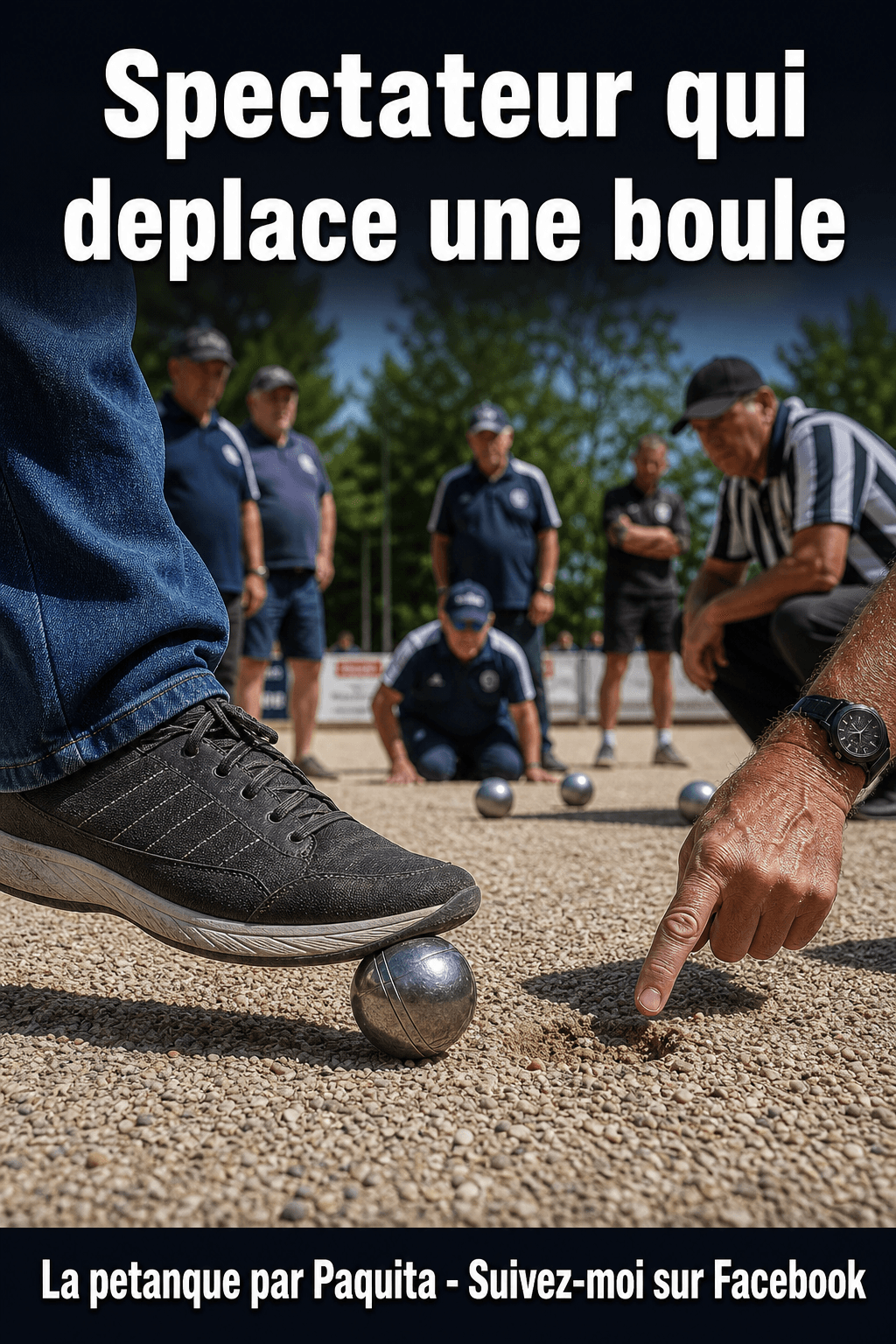
Spectator who moves a boule in pétanque: official rule and responsibilities
What does the rulebook provide when a spectator moves a boule in pétanque? Marked positions, putting back, referee, and responsibilities.1.Why a spectator is a special case
When a player moves their own boule, the responsibility is internal to the game. When a spectator does it, the incident comes from outside. The rules then seek not to arbitrarily penalise a team that provoked nothing. The solution depends heavily on the ability to know the initial position of the moved boule. This precision may seem slow in the moment, but it avoids cobbled-together decisions. In competition, properly applying the rules doesn’t mean shouting louder than your opponent: it means reconstructing the facts, protecting the useful positions and resuming the end within a framework that both teams can understand.
A crowd close to the play demands more discipline: important boules marked, jack marked, circulation lanes respected.
2.If the boule’s position is known
When the boule was marked or its position is beyond doubt, putting it back is the most logical solution. The aim is to restore the end as it was before the outside intervention. This replacement must be done calmly, with agreement or under the referee’s supervision. This precision may seem slow in the moment, but it avoids cobbled-together decisions. In competition, properly applying the rules doesn’t mean shouting louder than your opponent: it means reconstructing the facts, protecting the useful positions and resuming the end within a framework that both teams can understand.
3.If the position is uncertain
If no one can establish the initial position precisely, the decision becomes more delicate. The referee must assess the incident, the importance of the boule, the testimonies and the possibility of resuming play without unfair advantage.
When a spectator touches a boule, don’t pick the boule up to “show” the incident. Leave everything in place: the intact scene helps the referee.
4.Responsibilities around the court
The organisation must provide a circulation space and limit access to sensitive zones when the crowd grows. Players can calmly ask the public to step back if an end gets tight. It isn’t rudeness: it’s protecting the game. This precision may seem slow in the moment, but it avoids cobbled-together decisions. In competition, properly applying the rules doesn’t mean shouting louder than your opponent: it means reconstructing the facts, protecting the useful positions and resuming the end within a framework that both teams can understand.
5.How to resume the end cleanly
The resumption must be clearly announced. If the boule is put back, everyone must see the retained position. If the referee makes a different decision because the position is unknown, the players must accept it and resume without prolonging the dispute.
In clubs, this case even deserves to be explained before the finals or the most-watched games. A simple reminder over the mic, a rope placed a metre further back or a volunteer guarding the passage can avoid an unfixable situation. The rules provide a framework, but prevention always remains the best decision.
| Situation | Sound decision | Mistake to avoid |
|---|---|---|
| Marked boule | Put back on the mark | Rely on memories |
| Crowd too close | Ask to step back | Wait for the accident |
| Uncertain position | Call the umpire | Re-create roughly |
| Incident over | Announce the resumption | Keep disputing |
Outside incidents test the mind as much as the technique. This guide helps you stay clear-headed when every decision weighs.
Discover