Actualités · 22 June 2026
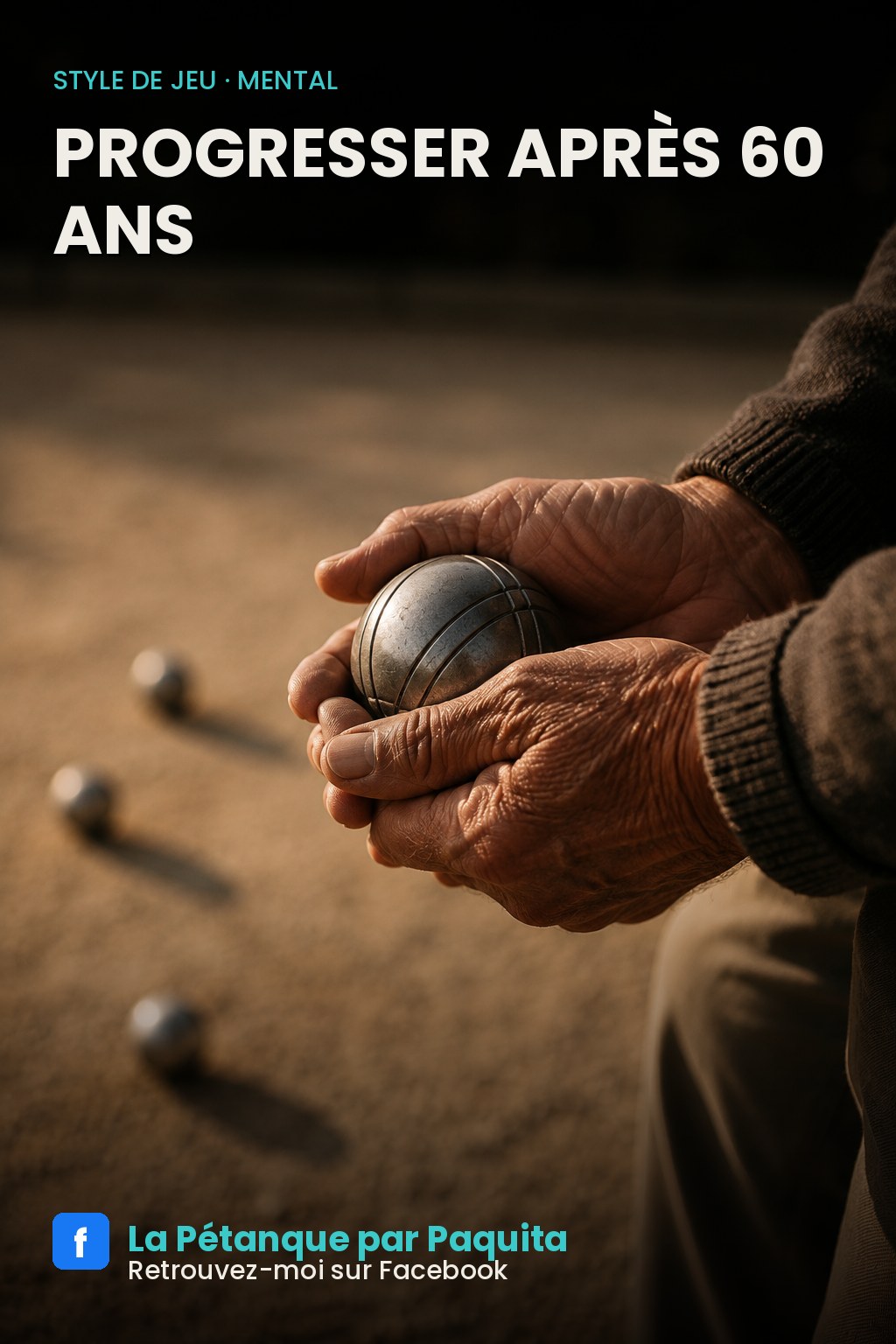
Why some people still improve at pétanque after 60
In pétanque, you can still improve after 60: experience, consistency and a fine reading of the game more than make up for physical decline. Here's how.1.A sport where age is not a handicap
Pétanque demands little intense physical effort: no sprint, no jump, no impact. The basic gesture — placing or striking a boule a few metres away — remains accessible for a very long time. What separates one good player from another is neither speed nor power, but the ability to put the boule in the right place, at the right moment, in the right state of mind. Now these qualities do not decline with age: they refine.
This is why a 65-year-old player who practises regularly can keep rising in level, where other disciplines would have sidelined him long ago.
⏳The real engine of progression after 60 is not the body but theaccumulated experience : thousands of ends played create a knowledge base that young players will take years to build. Provided you stay active and curious, this base keeps growing.
2.Experience that reads the game ahead of time
An experienced player “sees” situations before they happen. He knows, by looking at the terrain and the score, what shot the opponent will probably attempt, where to place to obstruct, when to play safe. This anticipation is not a gift: it is the fruit of hundreds of games stored in memory. The more one plays, the faster one recognizes patterns — and recognizing fast means deciding better.
3.Precision, which doesn't depend on strength
Placing a boule ten centimetres from the jack demands no power, only a regular and well-weighted gesture. It is even an area where the economy of movement of older players becomes an advantage: fewer parasitic gestures, a cleaner release, a repeatable trajectory. Many seniors point with a consistency that younger and more “athletic” players envy.
🎯 Paquita's tipIf the distance tires you, shorten your point instead of forcing: a supple and constant gesture over a mastered range is worth a thousand times more than a boule thrown hard that wanders off. Consistency beats power, always.
4.The mental calm of years of play
Pétanque is played largely in the head, and that is undoubtedly where age offers its finest advantage. A player who has lived through hundreds of tight ends of games handles pressure with a calm that nothing can replace. Where a young player tenses up on the decisive boule, the veteran breathes, takes his time and plays his usual shot. This emotional maturity is a skill in its own right — and it only grows.
5.Consistency, the weapon of seasoned players
Winning at pétanque is repeating good shots longer than the opponent. Experienced players excel in this constancy: they make fewer spectacular shots but far fewer mistakes. Over the length of a game, it is this consistency — not the brilliance — that makes the difference. And consistency is built with years of practice, not with youth.
6.What improves with age
Let us compare the evolution of the player's main qualities after 60. Some drop slightly, but the ones that matter most in pétanque rise:
Senior player's qualities — level out of 10 Experience & reading · 9/10 Enriched with every game: anticipation, choice of shots, score management. Precision & consistency · 8/10 Economical and repeatable gesture, few parasitic shots. Pure power · 5/10 Slightly in retreat — but it is the least decisive quality in the game.| Quality | With age | Weight in pétanque |
|---|---|---|
| Reading the game | Progresses | Decisive |
| Precision / measuring | Holds steady, refines | Decisive |
| Mental management | Progresses | Very strong |
| Power / max range | Drops a little | Secondary |
7.Adapt your game to keep progressing
Improving after 60 relies less on effort than on game intelligence. Three principles help with this.
1. Play to your strengths
Focus on pointing, placement and reading the terrain rather than on forceful shooting. Choose a team role that values consistency.
2. Preserve the action
A short warm-up, a range suited to your form on the day, well-tuned equipment: you protect the action to keep it reliable for a long time.
3. Keep learning
Curiosity sustains progress. Our free tools and the page little-known rules provide material to enrich your game at any age.
📚 PAQUITA'S REFERENCE The Pétanque Training Bible (Volumes 1 to 5)Pointing, shooting, tactics, mindset, preparation: the complete series to structure your progress at any age, with progressive exercises adaptable to your fitness. Plenty to keep improving, year after year.
📗 Discover the seriesFAQ — Your frequent questions
Can we really progress at pétanque after 60?+ Yes, and it's common. Pétanque rewards precision, reading the game and mental management — qualities that improve with experience rather than decline. A regular 65-year-old player often continues to improve in level, where other sports would have already slowed him down. Is the power drop a real problem?+ Not much, because power is the least determining quality of the game. Placing a ball near the goal does not require force, but a regular and well-balanced movement. Over long distances, we adapt our range or role; placement and reading remain intact. Why does experience matter so much?+ Because it allows you to anticipate: a seasoned player recognizes situations, guesses the opponent's move and chooses the right placement before others. This foundation of hundreds of games played is not transmitted — it is built over time, and continues to grow as long as you play. Should you change the way you play as you get older?+ We adapt rather than change. Focus more on the point and regularity, shorten the range if the distance is tiring, take care of the warm-up and the equipment. The objective is to preserve a reliable gesture and play to one's strengths, which is more than enough to remain competitive. How can you continue to improve at this age?+ By remaining curious and regular: play often, vary the opponents, analyze your games and work on one specific point at a time. Progression comes from playing intelligence and consistency, not from intense effort – two levers perfectly accessible after 60 years. 📎 Related articles GameThe lesser-known rules of pétanque ToolsFree PetanqueLand tools HomePétanque by Paquita© Pétanque by Paquita — petanqueland.fr ·
📘 Discover my books on PetanqueLand
Educational advice suited to all ages. Everyone adjusts their practice to their form and their goals.