Actualités · 10 June 2026
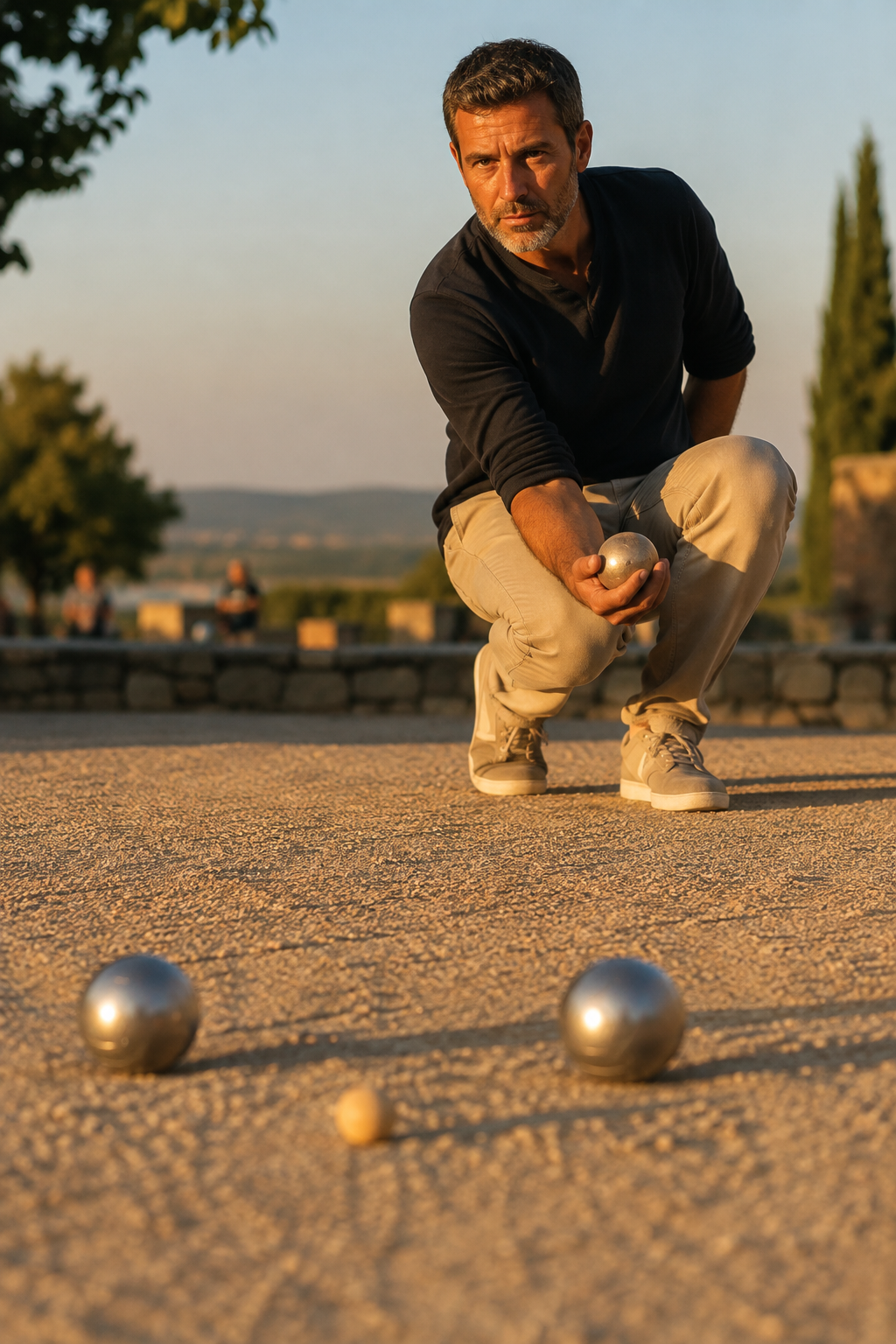
Playing not to lose VS playing to win
They're not two styles, but two states ofTwo drivers, not two styles
We think the difference is between attacking and defending. It's actually deeper: between the fear of a bad result and the desire of a good result.
Playing not to lose means letting the fear of the mistake steer every decision. You don't ask yourself how to score, but how not to mess up. Playing to win is the reverse: it's the desire to make the point that decides. You look for what you can take, not what you can avoid.
The nuance is crucial, because it shifts the problem: it's not a question of actions (defensive or offensive), it's a question of driver. And the driver changes everything that follows — the choice of shot, the tension in the arm, and even what you're able to see on the terrain.
Why we slide toward "not losing"
No one consciously chooses to play out of fear. It's a slide, and it has very concrete causes.
- Loss aversion. Our brain dreads a loss roughly twice as strongly as it savours an equivalent gain. Result: we overestimate the risk of missing and underestimate the benefit of succeeding.
- Protecting what you have. As soon as we're ahead, the instinct is to "keep what we have". We switch into conservative mode, we stop playing.
- Pressure. The higher the stakes, the more the fear of failure takes over the desire to succeed. It's precisely the ground for tension.
- The gaze of others. The fear of judgement ("what will they think if I miss") pushes toward the safe shot rather than the right shot.
What "not losing" really costs you
The problem isn't moral, it's mechanical: playing out of fear concretely degrades your game, in three ways.
You give away the initiative
By playing not to lose, you react instead of acting. It's the opponent who dictates the rhythm and the situations; you suffer. Now on a terrain, the one who imposes his game almost always has the advantage.
You tense up your gesture
The fear of missing stiffens the arm, tightens the hand and rushes or blocks the release. So you execute less well the very gesture you were trying to secure. The fear of doing badly makes you do badly — it's the heart of the block under pressure.
You no longer see the winning shot
The mind in "avoid danger" mode narrows the field of options: you only perceive the threats, no longer the opportunities. The shot that would have turned the end, the point that would have gone in: you didn't even consider them. And it's often self-fulfilling — by protecting so much, you let things slip.
What it looks like on the terrain
Concretely, here's how each mindset plays out, bowl after bowl.
NOT TO LOSE The driverAvoiding the mistake The question"What if I miss?" The pointerPlays safe too far from the jack The shooterDoesn't dare shoot, suffers When aheadWe protect without doing anything The executionTense, hesitant The resultWe let it slip TO WIN The driverForcing the point The question"What can I take?" The pointerGoes after the point The shooterShoots the bowl that has to go When aheadWe drive the nail in The executionCommitted, fluid The resultWe close out the game PAQUITA'S TIPThe classic trap is the lead. You're ahead 11 to 6, you tell yourself "just manage it"… and you stop playing. A lead isn't protected by doing nothing: it invites the opponent to come back. Keep playing to score, not to preserve. It's by driving the nail in that you close out a game, not by waiting.
The opposite trap: winning ≠ playing any old how
Mind the misunderstanding: "playing to win" doesn't mean shooting everything, trying everything, playing like a daredevil. That's theother face of fear. Rushing, forcing low-percentage shots "to get it over with", is wanting to flee the tension of the moment — so still fear, just disguised as boldness. And it wastes just as much.
There are actually three stances, not two:
🐢Passive fearNot losing. You shrink back, play safe too far out, don't dare shoot. You give away the initiative and wait for it to happen.
🎰Active fearTrying everything to get it over with. You rush, force low-percentage shots. It's fear disguised as boldness — it wastes just as much.
🎯IntentPlaying to win. You choose the best shot for the point — attack OR secure — but by decision, never by fear.
So the real "playing to win" is perfectly compatible with a safe point. Securing is often the winning shot — especially when you have the bowl advantage and a placed point closes out the exchange. The difference isn't in the action chosen, but in what dictates it: the game and your intent, or fear. A player playing to win can perfectly well place a safety bowl — but as a plan ("I close it out"), not as a flight ("if only I don't miss").
Let's be honest. Playing to win doesn't guarantee winning — the opponent has a say, and a beginner sometimes needs to play safer while building technique. The idea isn't to become reckless, but to no longer let fear be your default pilot. Deciding by intent is what can be worked on.How to switch to the right side
Good news: mindset isn't a character fate, it can be steered. A few concrete levers, to activate mid-match.
THE REFLEXES FOR PLAYING TO WIN- Change your question. Before each bowl, ask yourself "what can I take?" rather than "what if I miss?". The question steers everything else.
- Decide from the game, not from fear. The score and the bowl ratio dictate the right shot — not your apprehension of the moment.
- Commit to your choice. Once the decision is made, play it fully, without holding back the arm. Committing isn't forcing: it's playing without hesitating.
- Aim at the gesture, not the stakes. Focus on the execution of the bowl, not on what happens if you miss. The process rather than the result.
- Spot your fear signals. Playing safe too far out, refusing to shoot, playing fast to get it over with: these are the markers of "not losing" mode.
- When you secure, make it a plan. "I close out the game", not "I hide". Same bowl, opposite mindset.
No one ever won a game by hoping the opponent would lose it. Play to take the point, not to avoid giving it away — and even when you secure, let it be you who decides.
— Paquita 🏆 What if you finally played to win?Reading the game, managing a lead, deciding under pressure: Paquita's book helps you get out of the game of fear to decide with clarity — with concrete situations and bonuses to download.
📦 Order on AmazonAvailable on Amazon.fr · Paquita — PétanqueLand
Frequently asked questions
Does "playing to win" mean shooting everything and taking risks?No. It's playing the best shot to make the point — which can perfectly well be a safe point. Trying everything to get it over with is the other face of fear, not the opposite. The real difference lies between deciding and suffering, not between attacking and defending.
So securing is bad?Not at all. Securing is often THE winning shot, especially when you're ahead on bowl ratio and a placed point closes out the exchange. The problem isn't the defensive action, it's the defensive mindset: securing by choice ("I close out the game") has nothing to do with shrinking back out of fear ("if only I don't miss").
Why do I go passive as soon as I'm ahead?Because you switch into "protect what you have" mode. Loss aversion makes us overvalue what we already have and underplay so as not to risk it. But a lead isn't protected by doing nothing: passivity invites the opponent to come back. Keep playing to score, not to preserve.
Why does "playing not to lose" often make you lose?For three mechanical reasons: it gives away the initiative (the opponent dictates), it tenses up the gesture (so you execute less well), and it narrows your options (you no longer see the winning shot). The whole thing is often self-fulfilling: by protecting without trying anything, you end up letting slip what you were trying to keep.
How do I know which mindset I'm playing in?Listen to your inner voice just before playing. If it's "what if I miss?", you're playing not to lose. If it's "what can I take?", you're playing to win. On the gesture side, three signals betray fear: playing safe too far from the jack, refusing to shoot a bowl that has to go, and playing fast to get it over with.
How do you change mindset mid-match?Change your question (from "what if" to "what can"), decide from the game and not from your fear, then commit fully to your choice. And above all, focus on the execution of the gesture rather than the stakes: refocusing on the process is what unblocks you fastest, without having to "force yourself to be brave".
📎 Related articles Mental Playing under pressure: what really changes Tactics The invisible mistakes in doublette Technique The « forced » gesture: why it never works Progression The habits that hold you back without you realizing Tactics Pointing or shooting: how to really choose Tools Free PétanqueLand Tools© Pétanque by Paquita — petanqueland.fr
📖 Order the book on Amazon