Officiels & calendriers · 19 October 2026
Europétanque 2026: Montoro, Bonetto and Sarrio win the final in Cagnes-sur-Mer
The 2026 Europétanque finals are decided: Montoro–Bonetto–Sarrio win the open event and a Spanish triple take the women’s title in Cagnes-sur-Mer.Europétanque 2026 ended on Sunday 18 October in Cagnes-sur-Mer with two closely fought finals. In the open draw, Ludovic Montoro, Mickaël Bonetto and Christophe Sarrio beat Henri Lacroix, David Doerr and Patrice Mièvre 13–9. In the women’s event, Aitana Benzal Fernandez, Alba Coll Galindo and Maria Artacho Sanchez won 13–12 against Mégane Cacciatore, Amandine Blanche and Dolores Vercellotti.
1.What the sources allow us to state
The recap first relies on the results tables published by the Alpes-Maritimes FFPJP departmental committee, which list the teams and final scores. The official open page records a 13–9 win for Montoro, Bonetto and Sarrio over Lacroix, Doerr and Mièvre. The official women’s page gives a 13–12 win for Benzal Fernandez, Coll Galindo and Artacho Sanchez over Cacciatore, Blanche and Vercellotti.
These figures are cross-checked against the results coverage from L’Œil du Bouliste, checked on 19 October 2026, and the draw archive published by Boulistenaute. The event context comes from the official Europétanque website, which placed the heart of the competition on 17 and 18 October at the Hippodrome de la Côte d’Azur in Cagnes-sur-Mer.
The score is a verifiable fact; the impression of dominance is an interpretation. Here, the open 13–9 should not obscure the comeback from 9–9 to 13–9 shown in the official score progression.
2.Montoro, Bonetto and Sarrio finish strongly
The open final brought together two top-level triples. On one side were Ludovic Montoro, Mickaël Bonetto and Christophe Sarrio, described in Sportmag’s coverage as the French national-team triple. On the other were Henri Lacroix, David Doerr and Patrice Mièvre. The official table records a 13–9 result.
| Draw | Winning team | Finalist team | Score |
|---|---|---|---|
| Open | Montoro · Bonetto · Sarrio | Lacroix · Doerr · Mièvre | 13–9 |
| Women’s | Benzal Fernandez · Coll Galindo · Artacho Sanchez | Cacciatore · Blanche · Vercellotti | 13–12 |
The winning triple had already sent a strong signal in the semi-final, beating Diego Rizzi, Jean-Michel Puccinelli and Andrea Chiapello 13–1. The other semi-final was more closely contested, with Lacroix, Doerr and Mièvre winning 13–11 against Laurent Matraglia, Benoît Monros and Luc Laille. The final therefore opposed not a favourite and a surprise team, but two sides that had come through a very demanding last four.
3.The women’s draw is decided by one point
The women’s final was even tighter. Aitana Benzal Fernandez, Alba Coll Galindo and Maria Artacho Sanchez won 13–12 against Mégane Cacciatore, Amandine Blanche and Dolores Vercellotti. The FFPJP06 table also states that the Spanish triple won its semi-final 13–11 against Catherine Jeanroy, Émilie Ballocchi and Lucie Rousseaux.
On the other side of the last four, Cacciatore, Blanche and Vercellotti beat Christel Carzoli, Myriam Chambeiron and Mélodie Noculak 13–11. Both semi-finals therefore had the same intensity on the table before a final decided by the narrowest margin. This is a result to read as a balanced contest, not as a mere statistical detail.
In a 12–12 final, the last end does not sum up the whole match. The score confirms a win; it is not enough to reconstruct the strategy, playing order or quality of the shots.
4.The matches that changed the draw
The first turning point in the open draw was the exit of the defending champions. The report from SPORTMAG on 17 October states that Diego Rizzi, Jean-Michel Puccinelli and Andrea Chiapello eliminated Dylan Rocher, Maison Durk and Stéphane Robineau in the round of 32, 13–8 according to L’Œil du Bouliste. That result left the defending champions without a repeat title.
The second turning point was the Rizzi–Montoro semi-final. Rizzi’s triple, which had just knocked out the defending champions, did not reach the final: it lost 13–1. In the other half of the last four, Lacroix–Doerr–Mièvre had to reach 13–11 to remove Matraglia–Monros–Laille. This contrast explains why earlier rounds must be considered before reducing a competition to its podium.
The women’s draw tells a different story: both semi-finals ended 13–11, followed by a 13–12 final. The event was decided in a scoring zone where keeping a spare boule, choosing the right target and avoiding a free end matter more than an obvious difference in level.
5.What the result says—and what it does not
An official result answers three simple questions: who won, against whom and by what score. It does not automatically answer who played best throughout the day. To analyse a final properly, published facts must be separated from contextual commentary.
| Item | Status | Sound reading |
|---|---|---|
| Final score | Official fact | Repeat it as published |
| Point progression | A fact if the table publishes it | Use it to tell the comeback story |
| Best player of the weekend | Interpretation | Attribute it or present it as an opinion |
| Pre-event favourite | Context | Do not confuse it with the result |
For a player or club, this method is useful far beyond Cagnes-sur-Mer: keep the official sheet, record the check date and verify the draw category. The link to the pétanque results hub helps compare several competitions, while the Petanque officials section gathers calendars and coverage that should be used carefully.
6.What to watch now
The first point to watch is the mark this last four leaves on the end-of-season hierarchy. Montoro, Bonetto and Sarrio confirmed their ability to win a major draw after a very clear semi-final, while Lacroix, Doerr and Mièvre held their place through to the final. This does not create a future ranking, but it provides a reference for the next events.
The second point is the international reading of the women’s draw. The Spanish triple’s 13–12 win, after a 13–11 semi-final, signals an event open to teams from elsewhere. Future entries and announced line-ups will need watching without assigning this single result an enduring form that has not been documented.
Finally, the organisation and archives are worth preserving: venue, date, separate draws, results sheets and checking sources. For a club preparing its own competition, the FFPJP rules remain the starting point for separating an established result from a sideline comment.
Frequently asked questionsFrequently asked questions
Who won the 2026 Europétanque open?
Ludovic Montoro, Mickaël Bonetto and Christophe Sarrio won the open final 13–9 against Henri Lacroix, David Doerr and Patrice Mièvre on 18 October 2026 in Cagnes-sur-Mer.
What was the women’s final result?
Aitana Benzal Fernandez, Alba Coll Galindo and Maria Artacho Sanchez beat Mégane Cacciatore, Amandine Blanche and Dolores Vercellotti 13–12.
Did the defending champions retain their trophy?
No. Dylan Rocher, Maison Durk and Stéphane Robineau were eliminated in the round of 32 by Diego Rizzi, Jean-Michel Puccinelli and Andrea Chiapello, 13–8 according to the results coverage.
Which source should be checked to verify the scores?
The Alpes-Maritimes departmental committee’s tables are the starting point for the open and women’s finals. The results can then be cross-checked with L’Œil du Bouliste and the Boulistenaute archive.
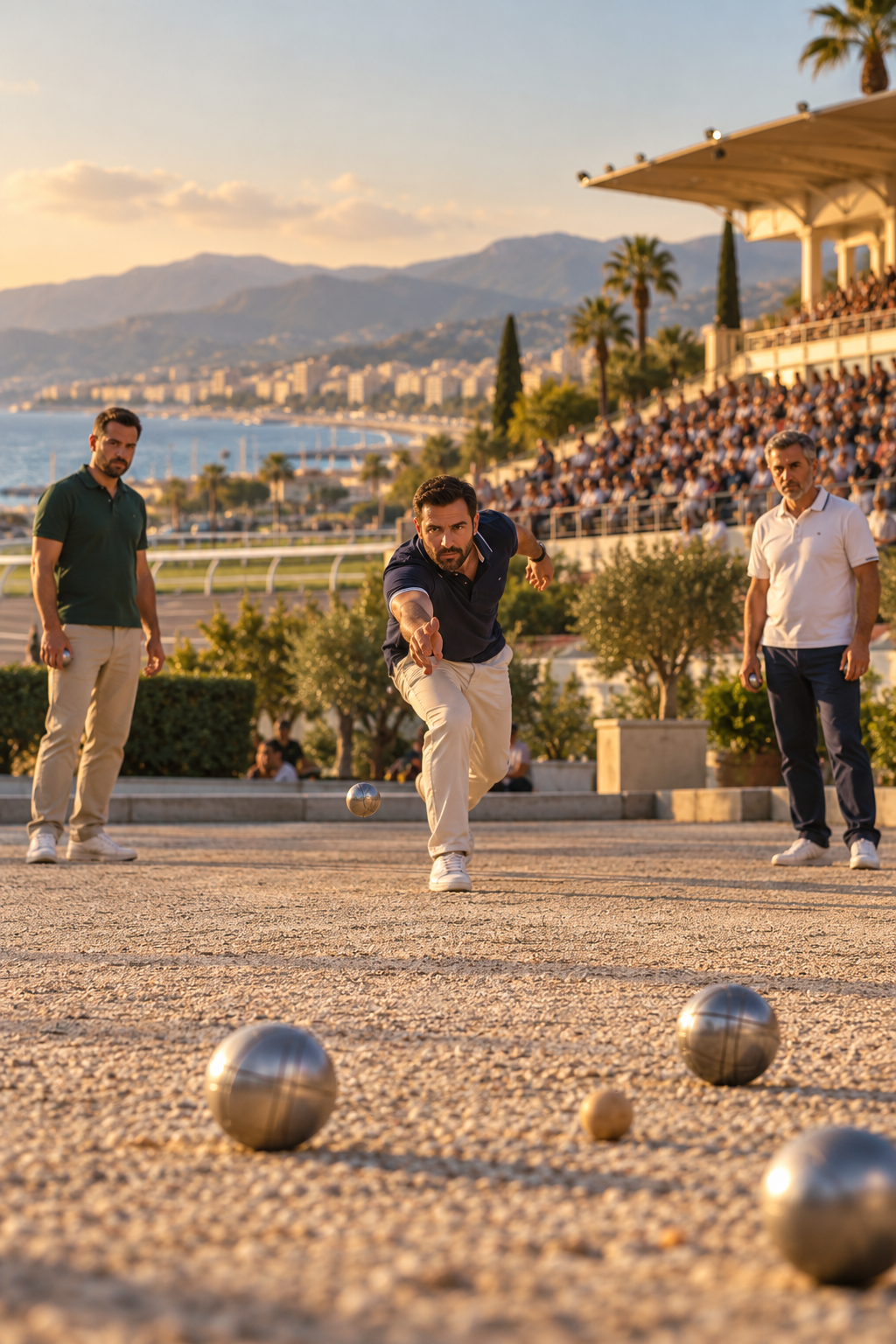
Is the image in this article a photo of the final?
No. It is an editorial illustration created for PetanqueLand; it is not a documentary photograph of Europétanque.
Sources consulted: FFPJP06 open table, FFPJP06 women’s table, results checked by L’Œil du Bouliste on 19 October 2026, Boulistenaute archive of the open draw, official website of theEuropétanque and coverage SPORTMAG on 17 October and from 18 October 2026.