Règlement FFPJP · 23 June 2026
These measuring errors in pétanque that unfairly cost you points
7 measuring mistakes in pétanque that unfairly lose you points: moving an unmarked boule, the wrong tool, measuring during an end, a bad angle.1.Error No. 1: moving a boule without marking it
It's by far the most costly error. The FFPJP rule (article 13) is unequivocal: any boule moved during measuring, when it has not been marked on the ground, is lost for its team. You were extending the tape measure, your knee touched the boule, it rolled a centimeter? Boule cancelled, automatic point for the opponent — even if you had the point.
The solution takes three seconds: before any measurement, draw a line with your finger or a stick in front of the boule, in its shadow. If it moves, you put it back to its original position and the measurement continues. It's the number-one reflex of experienced players.
✏️Field tip: if the ground is hard (compacted gravel, tarmac), a tap of the stick leaves a more visible mark than a finger. On soft ground, the finger is enough. Mark the jack too if you handle it: the same rule applies.
2.Error No. 2: measuring mid-end just to "see"
"I just want to check if I'm closer." Bad idea. The FFPJP rules allow measuring mid-end only to determine which team must play (article 27 — the one that doesn't have the point). Measuring out of mere curiosity adds a risk of displacement to every end, multiplies the chances of error, and wastes time that the umpires can penalize.
Best practice: measure only when it's useful for the decision (who plays? how many points scored?). Otherwise, you judge by eye and play.
3.Error No. 3: using an unsuitable tool
A fabric tape measure that stretches, calipers whose points no longer close, a DIY laser distance meter… The FFPJP rules only allow "suitable and approved" tools. In competition, a non-compliant tool can be refused by the umpire, and the measurement cancelled.
Comparison of tools by context
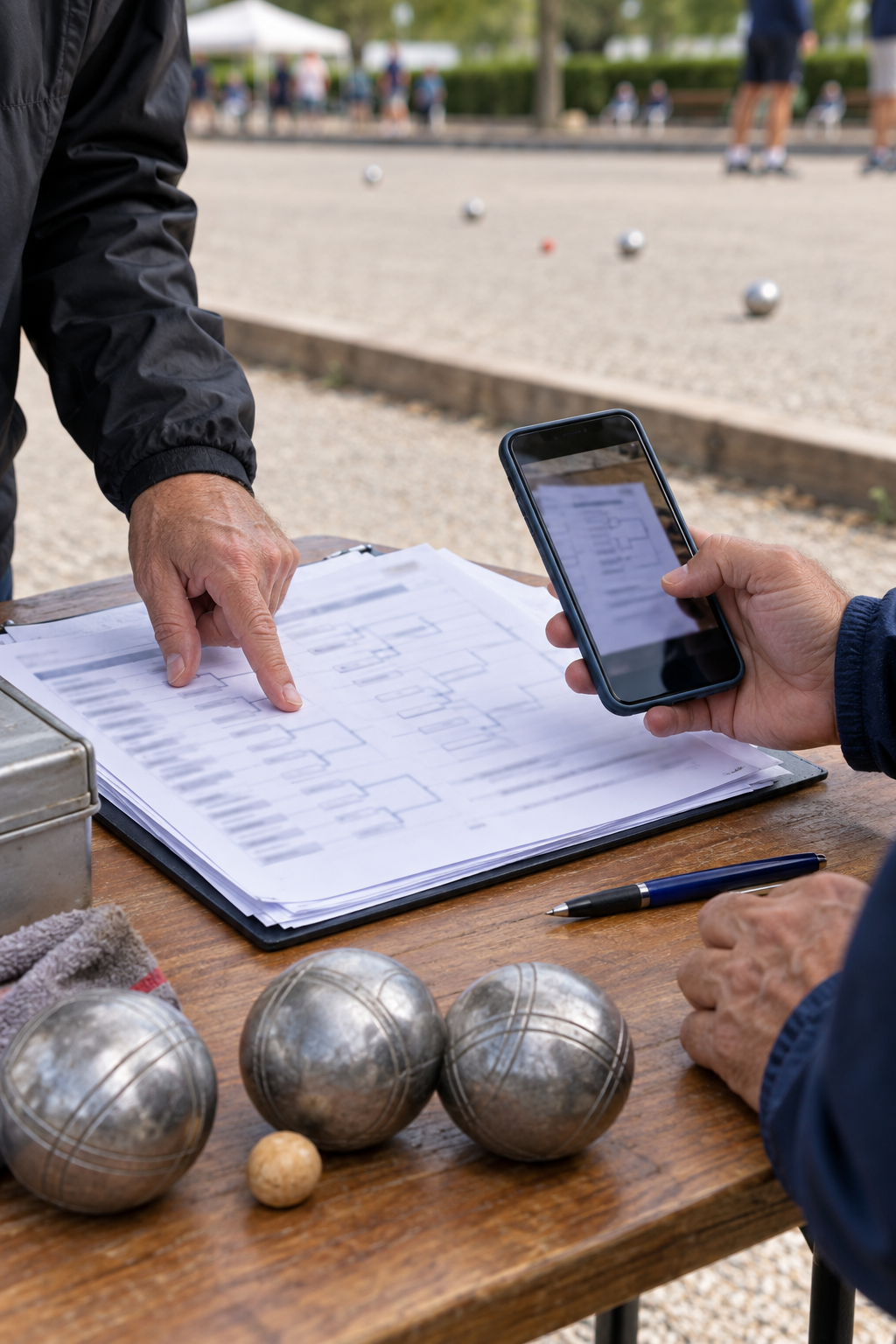
Pétanque calipers (≤ 2 mm)Optimal precision Rigid metal tape measureVery good Stick (touching boules)Specific Soft fabric tape measureImprecise Phone / appNot allowed4.Error No. 4: positioning the tape measure with poor support
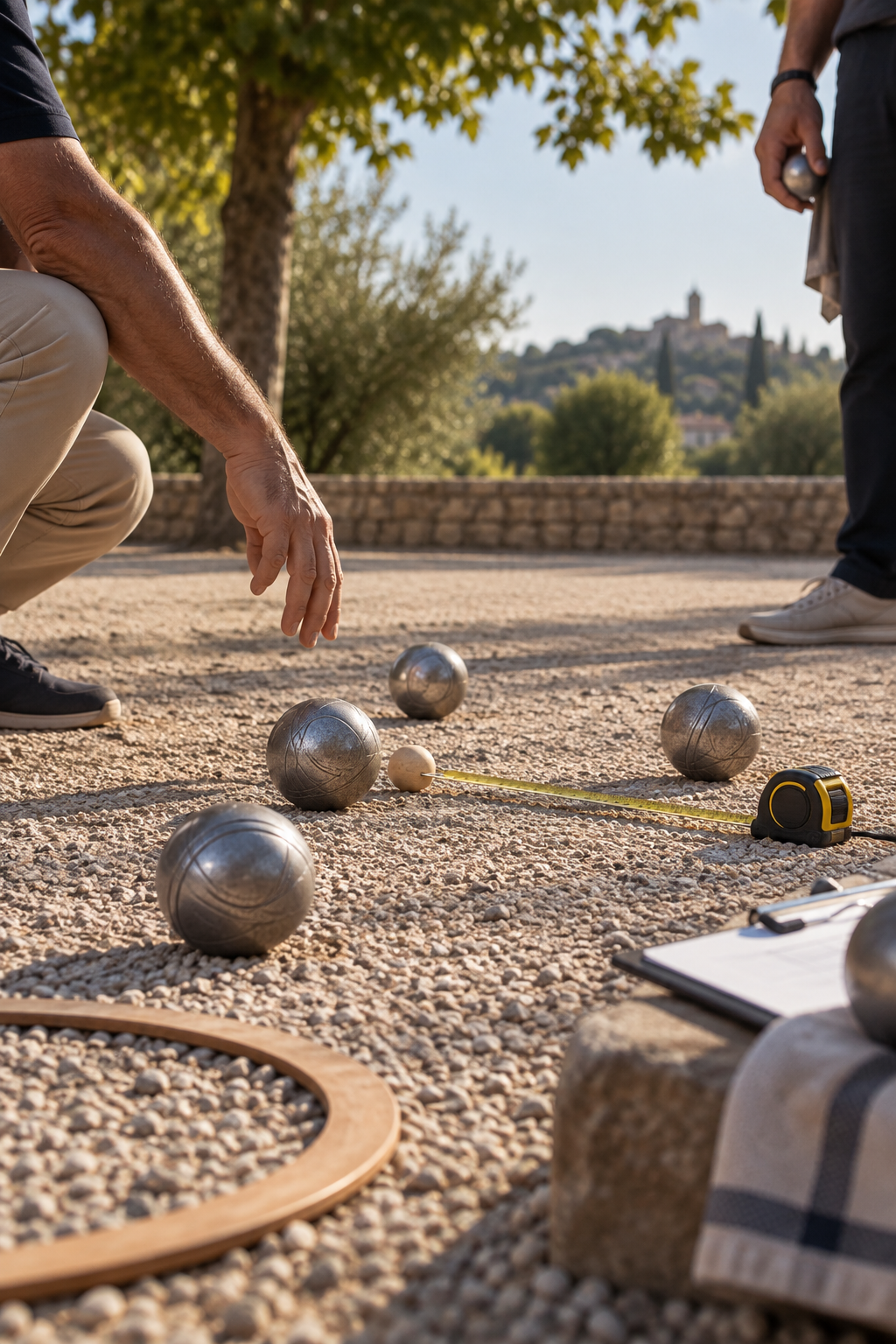
A very subtle technical error: positioning the tape measure at an angle relative to the true boule-jack axis. A tilted tape measure adds fictitious millimeters. When the gap between the two boules is a few millimeters, this detail can reverse the result.
Best practice: visualize the shortest straight line between the boule and the jack, align your gaze, place the tape measure exactly on that axis. Official umpires take this precaution systematically.
💡 Paquita's tipFor delicate measurements, crouch beside the boule-jack axis — not in front of it — to see the angle correctly. Hold the tape measure with both hands, one at each end. Avoid pressing on the boule: the pressure can make it roll. Calipers avoid all that: they position without contact.
5.Error No. 5: confusing the boule / jack reference point
The official FFPJP rule is clear: you measure from the boule tangent to the jack tangent. In other words, from the nearest edge of the boule to the nearest edge of the jack, not from the centers of both. Players who measure "center to center" systematically distort the reading. The error is rarely detected because it applies to both boules, but it can reverse the result when the boules' diameters differ slightly.
6.Error No. 6: measuring alone, without an opponent as witness
Measuring alone, off to the side, without an opponent watching, is exposing yourself to dispute. Even if you're perfectly honest, the other team has the legitimate right to doubt a reading they couldn't observe. Result: a new measurement demanded, lost time, needless tension.
The golden rule: every measurement must be visible to at least one player from each team. If you're the only one measuring, call an opponent before you start. This simple precaution defuses 80% of disputes.
7.Error No. 7: not calling the umpire
In an official competition, persisting in measuring when an umpire is available is a waste of time and a source of dispute. The FFPJP rules provide for the umpire to rule as soon as a team requests it. Their decision is final. Many players hesitate out of pride or to avoid looking "argumentative" — it's the opposite: calling the umpire is respecting the official procedure.
8.Comparison: impact of each error on the result
| Error | Frequency | Potential cost | Ease of correction |
|---|---|---|---|
| Unmarked boule moved | Very high | Boule lost (article 13) | Very easy (mark it) |
| Pointless mid-end measurement | High | Time-wasting warning | Easy (abstain) |
| Unsuitable tool | Moderate | Measurement refused | Easy (calipers) |
| Poor tape measure support | High | Distorted reading | Medium (technique) |
| Center vs tangent | Very high | Reversed result | Easy (method) |
| Measurement without witness | Moderate | Systematic dispute | Very easy (calling) |
| No umpire called | High in competitions | Prolonged dispute | Very easy (raising the hand) |
FAQ — Your frequent questions
Is a ball moved without a mark really lost?+ Yes. Article 13 of the FFPJP regulations is explicit: any unmarked ball moved during the end or measurement is lost for its team. Even if it moves a millimeter. Can we remeasure after making the wrong support?+ Yes, provided the balls have not been moved and both teams agree. This is the advantage of marking the balls: you can take everything back cleanly. Is the compass obligatory in competitions?+ No, the rigid tape measure is sufficient for most measurements. The compass becomes essential for deviations less than 2 mm, where the meter is not precise enough according to the FFPJP regulations. How to measure if a ball touches the jack?+ If it touches, it must be the closest. We use a stick (or a coin) slipped between the two to check the contact. If the wand does not pass, contact is confirmed. What to do if you disagree about the method used?+ In a friendly game, we measure together following the official method. In competitions, we call the arbitrator whose decision definitively settles the dispute. 📎 Related articles RulesHow to measure the boules: official method RulesMeasuring dispute: who is right? RulesThe little-known rules of pétanque© Pétanque by Paquita — petanqueland.fr ·
📘 Discover my books on PetanqueLand
Article based on the official FFPJP pétanque rules. Local club customs may add details without contradicting the federal rules.