Règlement FFPJP · 15 July 2026
Rule for the jack that bounces out of bounds: how to replay according to the rules
Jack that bounces out of bounds in pétanque: validity, end, possible points, and good reflexes to replay according to the rulebook.1.The jack's bounce often creates a false debate
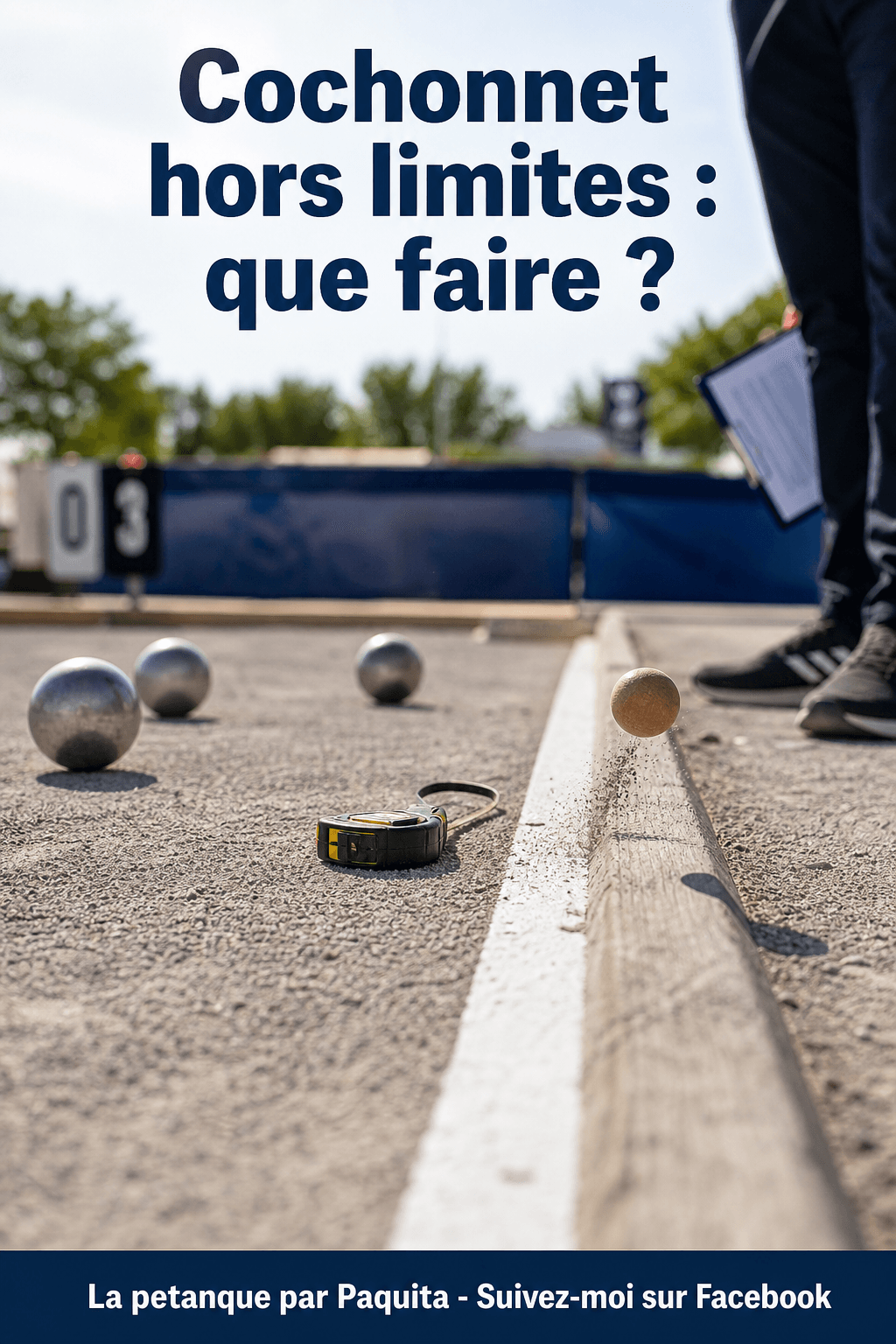
The scene is classic: a boule strikes the jack, the jack jumps, hits a board, crosses a boundary or ends up in a debatable zone. Immediately, opinions go in every direction. Some want to replay the end, others to count the remaining boules, others still to replace the jack or carry on as if nothing happened. The problem rarely comes from the bounce itself. It comes from the fact that players don't ask the right questions in the right order.
2.The three questions to ask before deciding
First point: is the jack still valid, that is to say visible and in an authorized zone? Second point: are there still boules to play in each team? Third point: do the boules already played allow points to be awarded according to the situation? These questions guide the decision. Without them, you confuse a simply moved jack, a dead jack, an end to continue and a situation that changes the score. The rules do not judge the shooter's intention; they judge the final state of the jack and the boules.
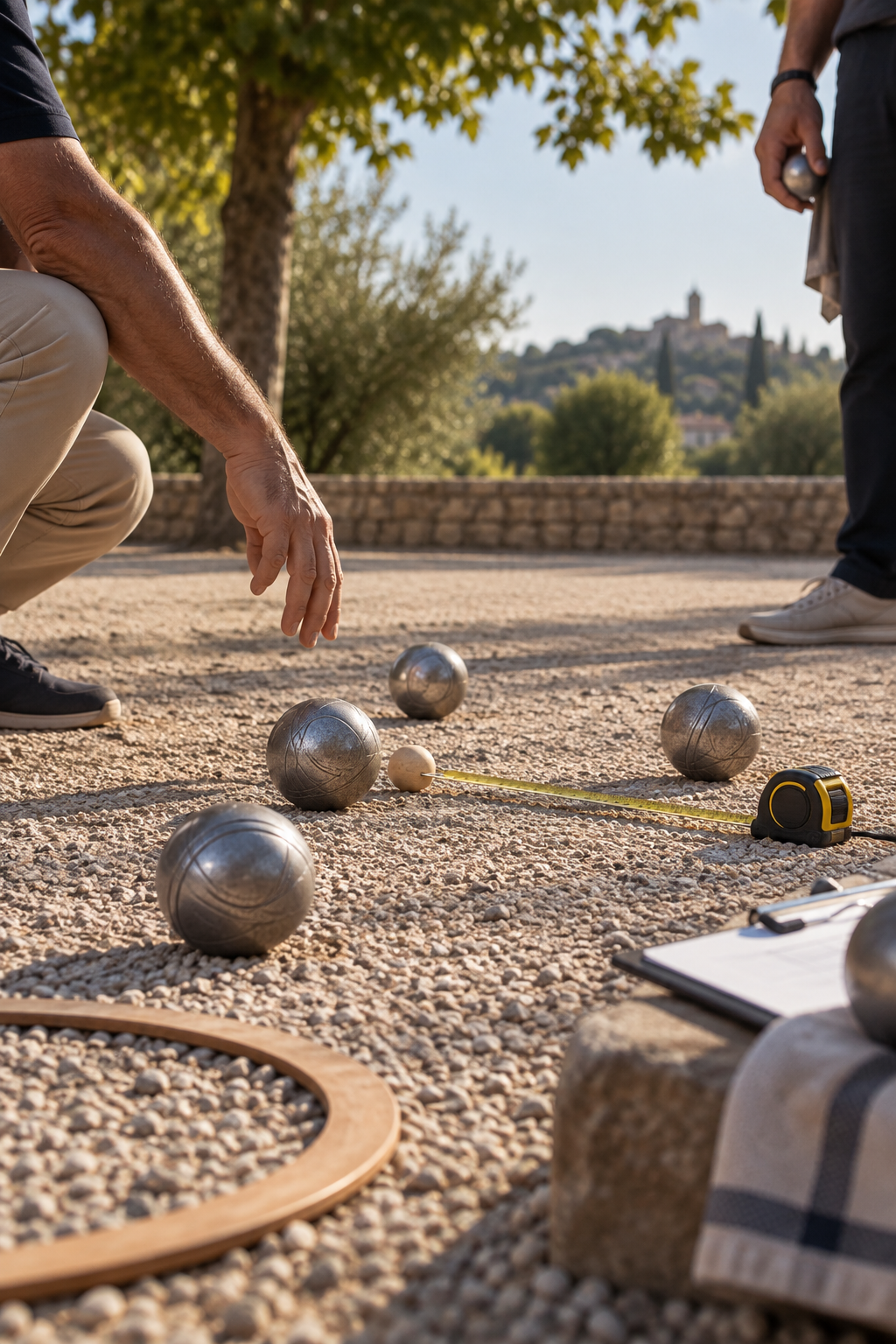
Key point: don't touch anything until the situation has been recorded. In a tournament, the first practical mistake often consists of moving a bowl, a jack or a circle before clarifying the applicable rule.
3.Out of bounds doesn't always mean the same consequence
When the jack clearly leaves the authorized terrain or becomes dead, the consequence depends on the context of the end. If both teams still have boules, the end can be considered dead and replayed under the prescribed conditions. If only one team still has boules, that team can score as many points as it has boules remaining to play, if the conditions of the rules are met. That's the surprising detail: the same apparent bounce doesn't always produce the same score.
4.The most common mistakes after a bounce
The first mistake is to replace the jack approximately. Except in prescribed cases, you don't reconstruct the scene by eye to suit everyone. The second is to announce "dead end" too quickly without counting the remaining boules. The third is to confuse a physical edge with the official boundary: a board, a string or a line only has value if it matches the defined frame. Finally, some players forget to mark the jack before playing; in the event of an incident, this greatly complicates the discussion.
| Situation | Good reflex | Common mistake |
|---|---|---|
| Doubt over a line | Record before touching | Replace by eye |
| Disputed equipment | Check the markings | Say "we've always played with these" |
| Decision dispute | Call the umpire | Negotiate under tension |
5.When should you call the umpire?
Call the umpire when the validity of the jack is contested, when the boundary is unclear, or when the two teams cannot agree on the remaining boules and their consequences. The umpire observes the current situation; they cannot always reconstruct what was not marked. Hence the importance of marking the jack and the important boules. The more readable the scene, the faster the decision will be. Calling the umpire is not dramatizing: it's preventing an entire end from resting on a fragile interpretation.
Before an official game, run a simple check: terrain, circle, jack, bowls, score and order of play. This routine takes less than a minute and avoids most pointless discussions.
6.Good reflexes to stay on track
Before each offensive shot near the jack, mentally check the risk: if I move the jack, what happens? How many boules do we have left? How many does the opponent have left? This anticipation turns a suffered situation into a tactical decision. After the bounce, don't touch anything, look at the boundaries, count the boules and calmly state the rule. Calm comes from the method: observe, count, decide.
The more official the setting, the more visible small oversights become. The goal isn't to play with fear, but to play with method.
Better mastering the trajectories, the landing spots and the effects of the terrain also helps avoid unnecessary bounces of the jack in tense moments.
Discover