PetanqueLand
Search: Movie should be distinctly Please enter a search term in the search field.

Not to be missed

Search suggestions

Why do some boules veer off for no apparent reason? (Pétanque) Article Why do some boules veer off for no apparent reason in pétanque? PAQUITA ON PÉTANQUE STRIKE Video Pétanque: when you celebrate too soon… Video pourquoi il ne faut jamais celebrer avent la (1)-Couverture Boule diameter: why the wrong choice holds you back (Pétanque) Article Which boule diameter should you choose? The direct impact on your performance THE DIGESTION EXCUSE Video
Cart 0
EN▾
FrançaisEnglishEspañolItalianoDeutschPortuguêsNederlandsCatalàالعربية中文ไทย
PetanqueLand
  • Home
  • SHOP
    • Pétanque Book Shop
    • Pétanque Player Clothing
    • Pétanque Objects & Decor
    • Pétanque Gift Ideas
    • See all
  • ⭐ The Pétanque Software
  • Videos
  • 🏛️ OFFICIAL
    • Upcoming competitions
    • Results & calendar
    • Rules explained
  • FREE Zone
    • Free online software
    • Free tools
    • Lab
  • News by Paquita
Total articles: 193
Rule of play — Order and direction

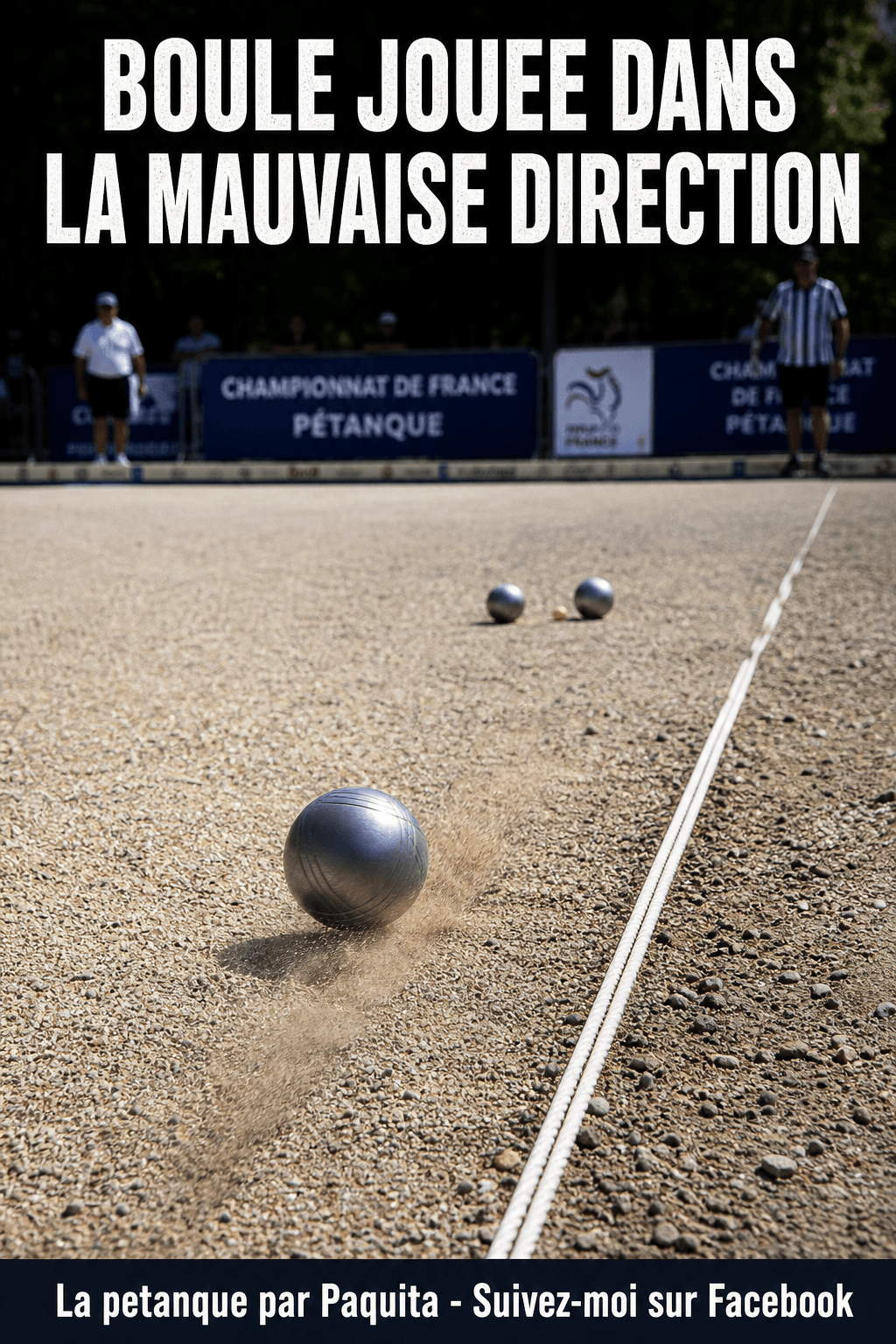
Boule played in the wrong direction : which official rule?

A boule goes off on the wrong line, towards the wrong terrain or against the direction of the end: should it be cancelled, replayed or left where it stops? Here's the regulatory reading, without club folklore.
FFPJP RulesPoorly played bouleBy PaquitaReading time: 8 min
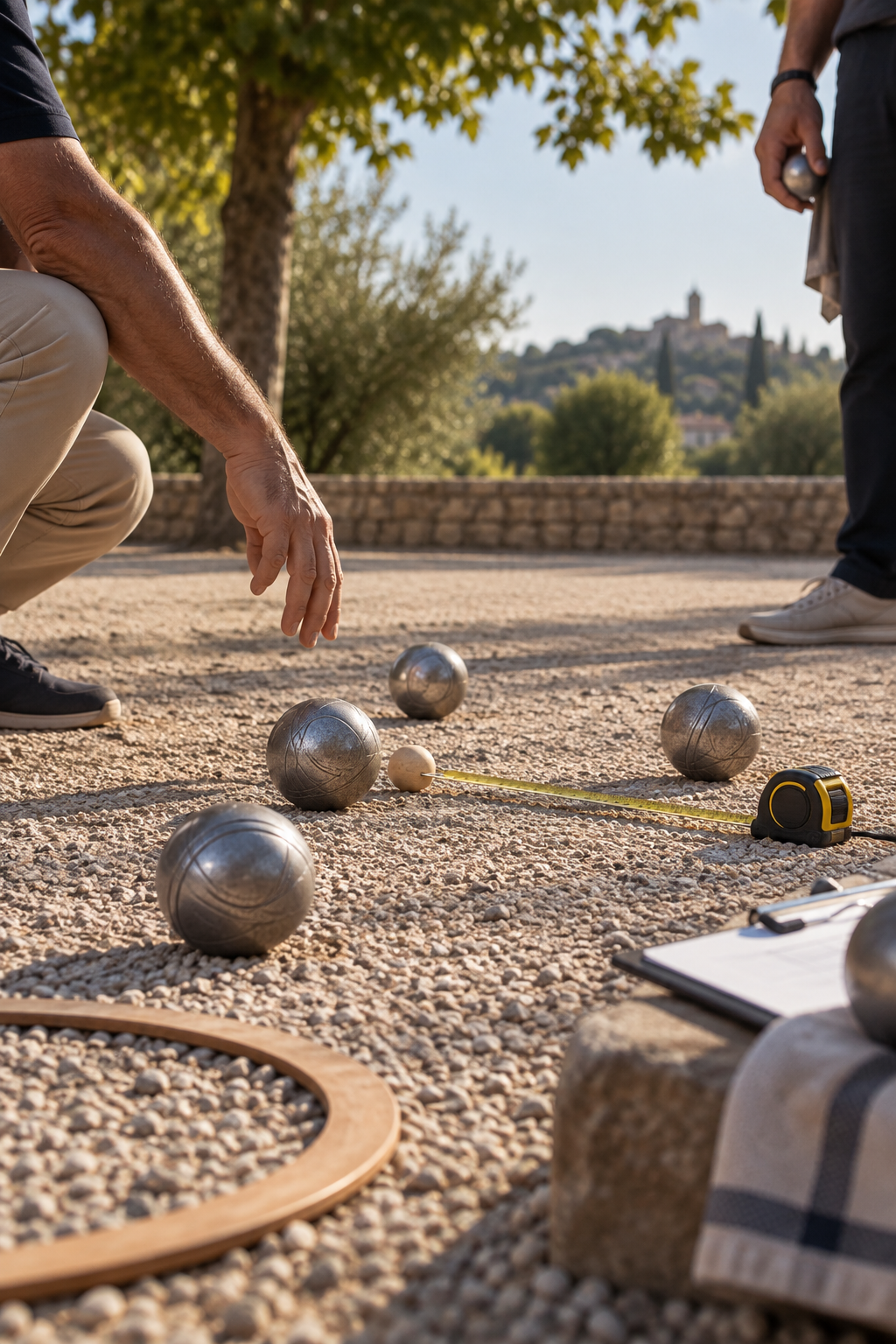
The scene happens more often than you'd think: a player picks the wrong line, plays too cross-court, aims at the wrong boule or sends their boule towards a neighbouring terrain. The temptation to shout “replay!” is great. Yet the rules don't work on impression. They distinguish the validly thrown boule, the boule that crosses into forbidden terrain, the boule stopped or deflected by an external cause, and errors of order of play. The right decision therefore depends on what actually happened during its path.
1
principle
a regularly thrown boule often remains valid
0
improvisation
you don't decide “by arrangement”
3
questions
terrain, interference, order of play
1
referee
to call if the situation degenerates
In this article
  1. The principle: judge the played boule
  2. Wrong direction or forbidden terrain?
  3. Difference with the wrong player
  4. If the boule interferes with another game
  5. The right reflexes in a competition
  6. Quick reading of the cases
  7. FAQ

1.The principle: a played boule isn't cancelled just because it was clumsy

In pétanque, a missed boule, too long, too cross-angled or played with an absurd intention remains a played boule. The rules do not protect the player against a poor technical decision. If the boule was thrown from the circle, by a player authorised to play, without being stopped deliberately or passing into a zone where it becomes dead, it generally keeps its final position.

This matters, because many disputes come from confusing “wrong direction” with “irregular shot”. A boule can be very badly aimed without being irregular. It can finish far from the jack, go off to the side or hit an unexpected boule: this result is part of the game. You don't replay a boule simply because everyone realised afterwards that the player had made a mistake.

Simple reference point: the question isn't “did the player want to do that?”, but “was the boule played in accordance with the rules and where did it stop?”.

2.Wrong direction or forbidden terrain: the nuance that changes everything

The wrong direction becomes a real problem when the boule leaves the playing frame or crosses a forbidden terrain. In this case, the rules on dead boules and boundaries are applied. A boule that fully crosses a dead line, that touches a forbidden zone according to the competition layout or that returns after passing through a forbidden terrain may no longer be considered valid.

On an unmarked open terrain, the reading is more delicate: you have to look at the boundaries set before the game. In an official competition, the strings, end lines, neutralised zones and the organiser's decisions serve as the reference. That's why an experienced player always checks the terrain before the first end, especially when several games are very close together.

3.Do not confuse with the wrong player or the wrong boule

A boule sent in the wrong direction is not the same thing as a boule played by the wrong player. The rules provide a specific framework when a player throws a boule that isn't theirs or when the order of play is disputed. The boule may remain valid, but the offending team can receive a warning and the boule must be replaced if it doesn't belong to the player.

The key point: first analyse the identity of the player and the boule, then only the trajectory. If the right player plays their own boule but aims at the wrong side, you're generally in a choice error. If the wrong player steps in, you enter a clearer disciplinary and regulatory case.

Paquita's tip

Before claiming, calmly rephrase: “Who was supposed to play? Which boule was thrown? Did it cross a forbidden boundary?” These three answers avoid 80 % of pointless disputes.

4.If the boule interferes with another game

In large competitions, a badly directed boule can land on the neighbouring terrain. Here too, you don't decide at random. If it disrupts a neighbouring end, the players concerned must stop, signal the situation and, if needed, call the umpire. Boules or jacks moved by an external element are treated according to their marking and their original position.

Marking then becomes essential. A marked boule can be put back in its place if it is moved accidentally. An unmarked boule often deprives the team of a solid argument, because the umpire can't guess an exact position. The rules stress this point to avoid approximate reconstructions.

5.The right reflexes in an official competition

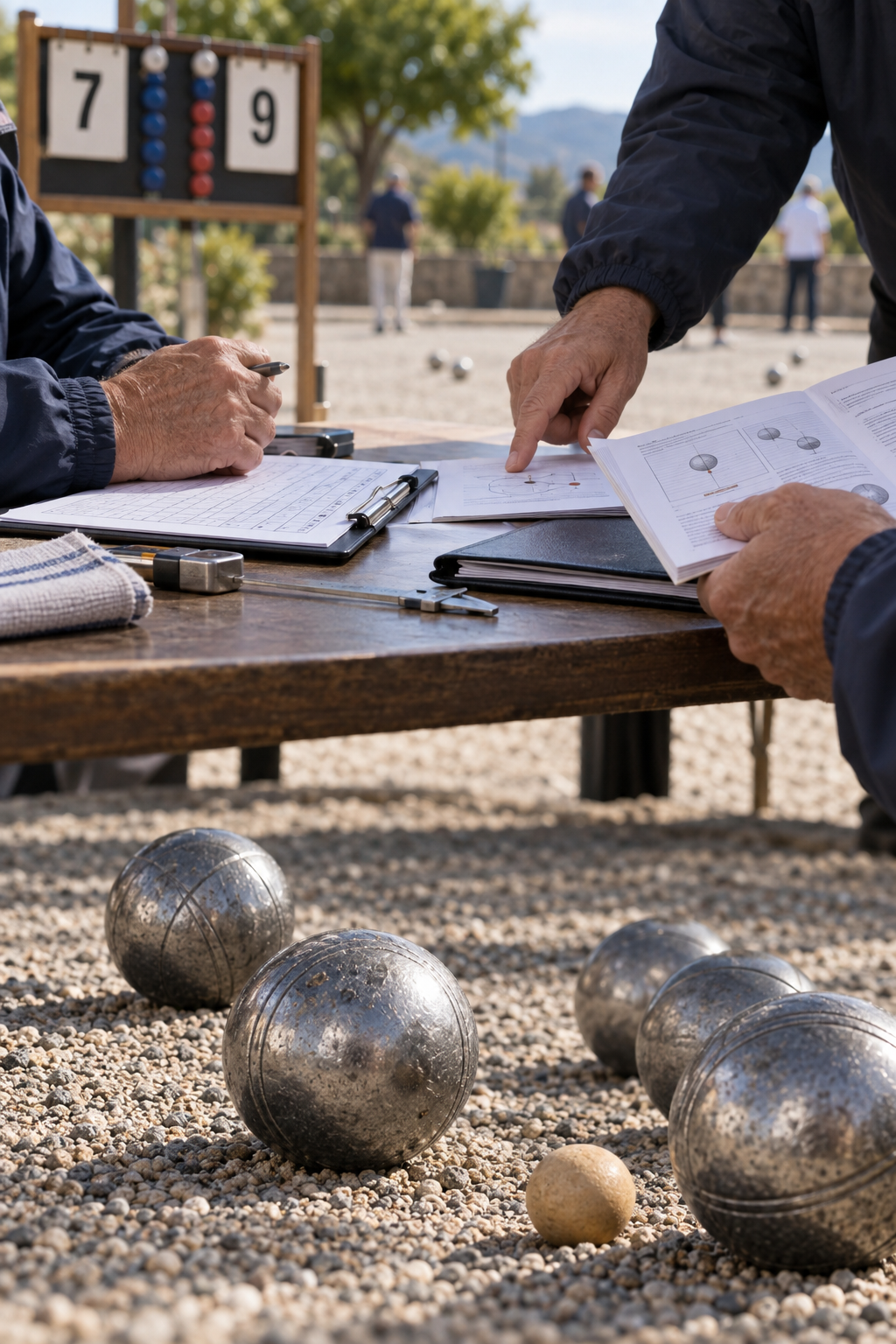
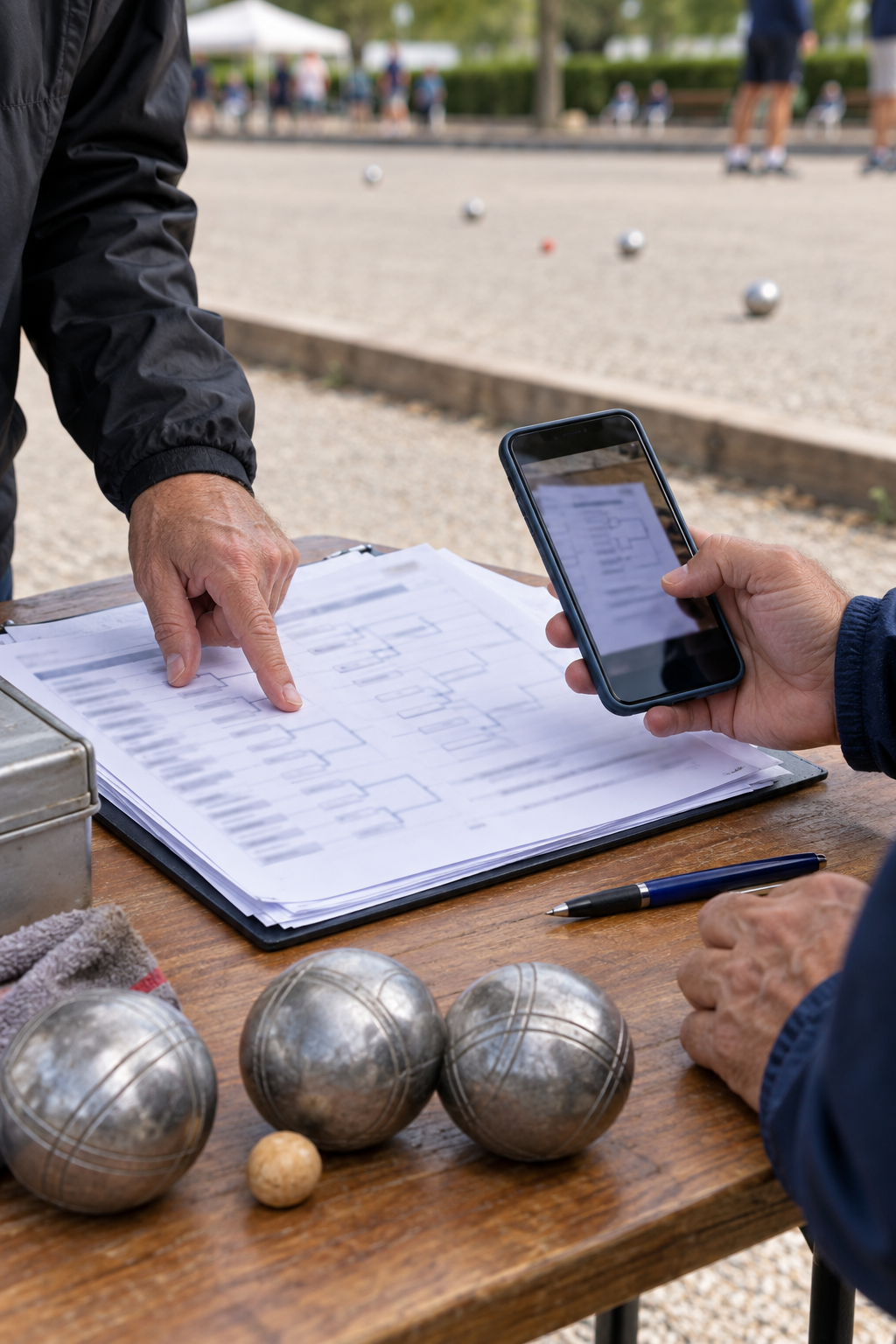
The first reflex is to touch nothing. A disputed boule must stay visible, especially if it has moved another boule or a jack. Then, identify the sequence: throw, possible exit, impact, stop, final position. Finally, call the umpire if the teams don't agree.

This reflex seems pedantic, but it protects everyone. Improvised decisions create dangerous precedents: one team agrees to replay “to be nice”, then refuses the same arrangement two ends later. In a competition, safety comes from the rule, not from negotiation.

6.Quick reading of the cases

Risk of dispute according to the situation
Poorly aimed boule but valid
low if it stays in play
Boule towards neighbouring terrain
high if it interferes or moves something
Level of urgency to call the umpire
Simple over-crossed boule · 3/10
The boule stays where it is if it is valid.
Boule disrupting another game · 9/10
We stop, we observe, we umpire.
SituationReflexProbable decision
The boule goes far from the jackWe leave itBoule valid if no boundary is crossed
It crosses a dead lineWe checkPossibly dead
It moves a neighbouring bouleWe stopUmpiring according to marking
PAQUITA'S BOOK
The Ultimate Guide to Difficult Terrain

Knowing how to read the lines, the boundaries and the trap zones helps to avoid absurd shots that end in a dispute.

Discover the book
FAQ — Your frequent questions

No. It's only void if a rule of validity is violated: out of bounds, forbidden terrain, deliberate stop or a case provided for by the rules. A simple aiming error isn't enough.
In competition, it's best to avoid arrangements. If the boule is valid, it stays played. If it's disputed, call the umpire.
Touch nothing, warn the players concerned and call the umpire if a boule or a jack has been moved.
Yes if it remains valid and hasn't crossed a forbidden zone. Touching an unexpected boule doesn't automatically cancel the shot.
Because a boule moved accidentally can only be put back correctly if its initial position is known. Without marking, the complaint becomes weak.
Related articles
RulesThese edge cases with boules off the terrain that the rules settle clearlyRulesThe little-known rules of pétanqueToolsFree PétanqueLand tools

© Pétanque by Paquita — petanqueland.fr. Educational article based on the official FIPJP/FFPJP regulations; in competitions, the referee remains the sole authority to settle a disputed case.

Share Follow

📬 Paquita's pétanque newsletter

New articles, videos, free tools and offers — straight to your inbox.

← Previous articleWhat are the official dimensions of a pétanque court?Next article →Boule accidentally moved in pétanque: what to do according to the rulebook?
← Return to rules

About PétanqueLand

PétanqueLand.fr is the fun, practical site devoted to pétanque: videos, humour, photos & memes, free tools and news.

Find Pétanque by Paquita and join the community!

Categories

  • ⭐ Celebrities
  • 🎥 LIVE training
  • ❓ Questions & Tips
  • 🎭 Parodies
  • 🐕‍🦺 Animals
  • ⚖️ Refereeing
  • 🍻 Refreshment bar
  • 🎬 Series
  • 😂 Pétanque humour
  • 🤯 WTF moments
  • Most viewed
  • What's new

Information

  • Home
  • SHOP
    • Pétanque Book Shop
    • Pétanque Player Clothing
    • Pétanque Objects & Decor
    • Pétanque Gift Ideas
    • See all
  • ⭐ The Pétanque Software
  • Videos
  • 🏛️ OFFICIAL
    • Upcoming competitions
    • Results & calendar
    • Rules explained
  • FREE Zone
    • Free online software
    • Free tools
    • Lab
  • News by Paquita

Follow Paquita

Find Pétanque by Paquita on my social networks:

Facebook
TikTok
YouTube
Instagram
X

📸 Photos & memes
🎯 Pétanque videos
😂 Humour & WTF moments
🧰 Free tools

© 2026 PetanqueLand — The craziest boulodrome on the web. Pétanque videos, humour, refereeing & debates. Contact · Legal notice · Privacy Join me: Facebook · TikTok · YouTube · Instagram · X