Actualités · 7 July 2026
Bluffing at pétanque: useful or pointless?
Hiding a doubt behind a calm air: does bluffing really have a place in pétanque? What it brings, its limits, and the alternative that works better.1.Bluffing in pétanque, what are we talking about?
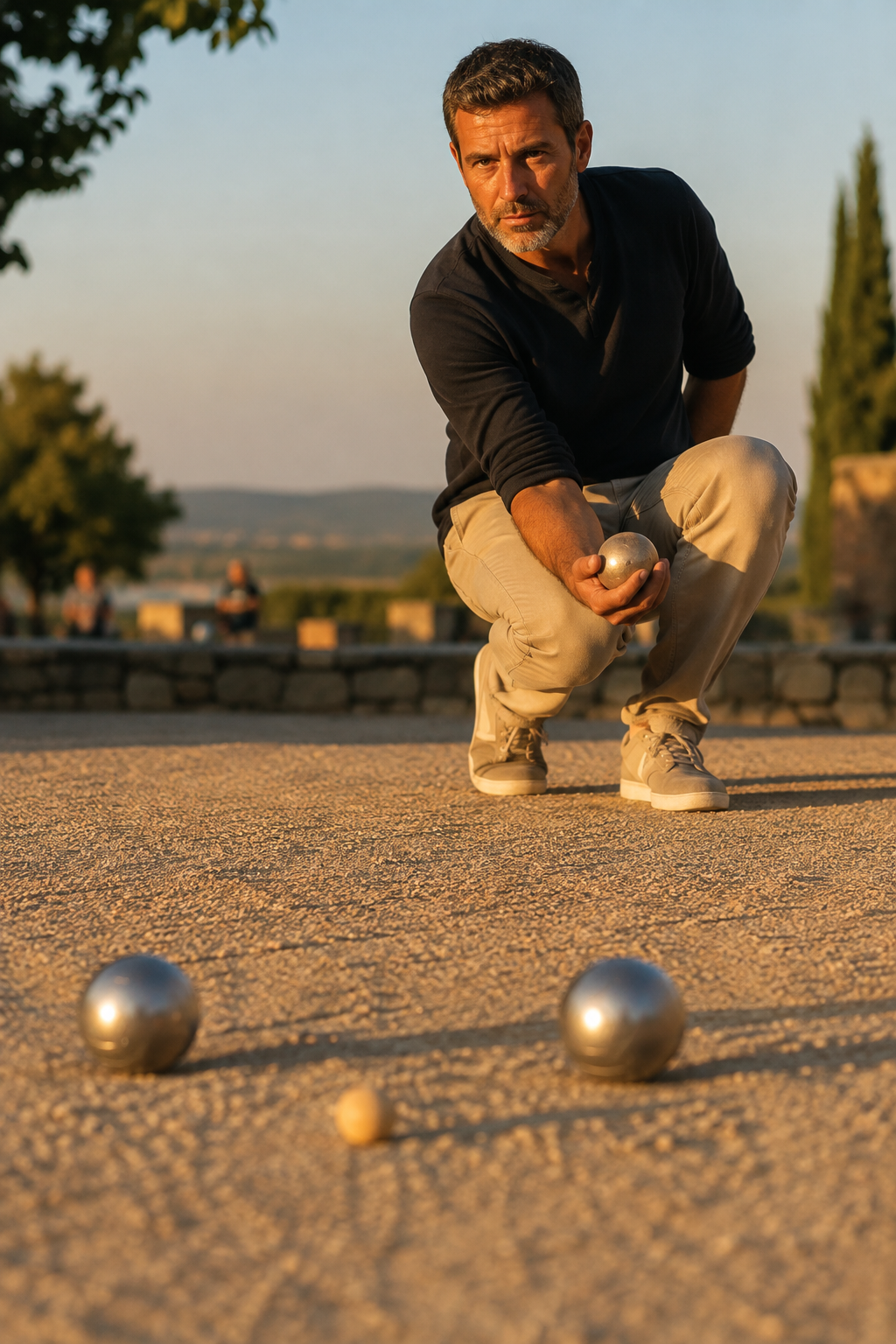
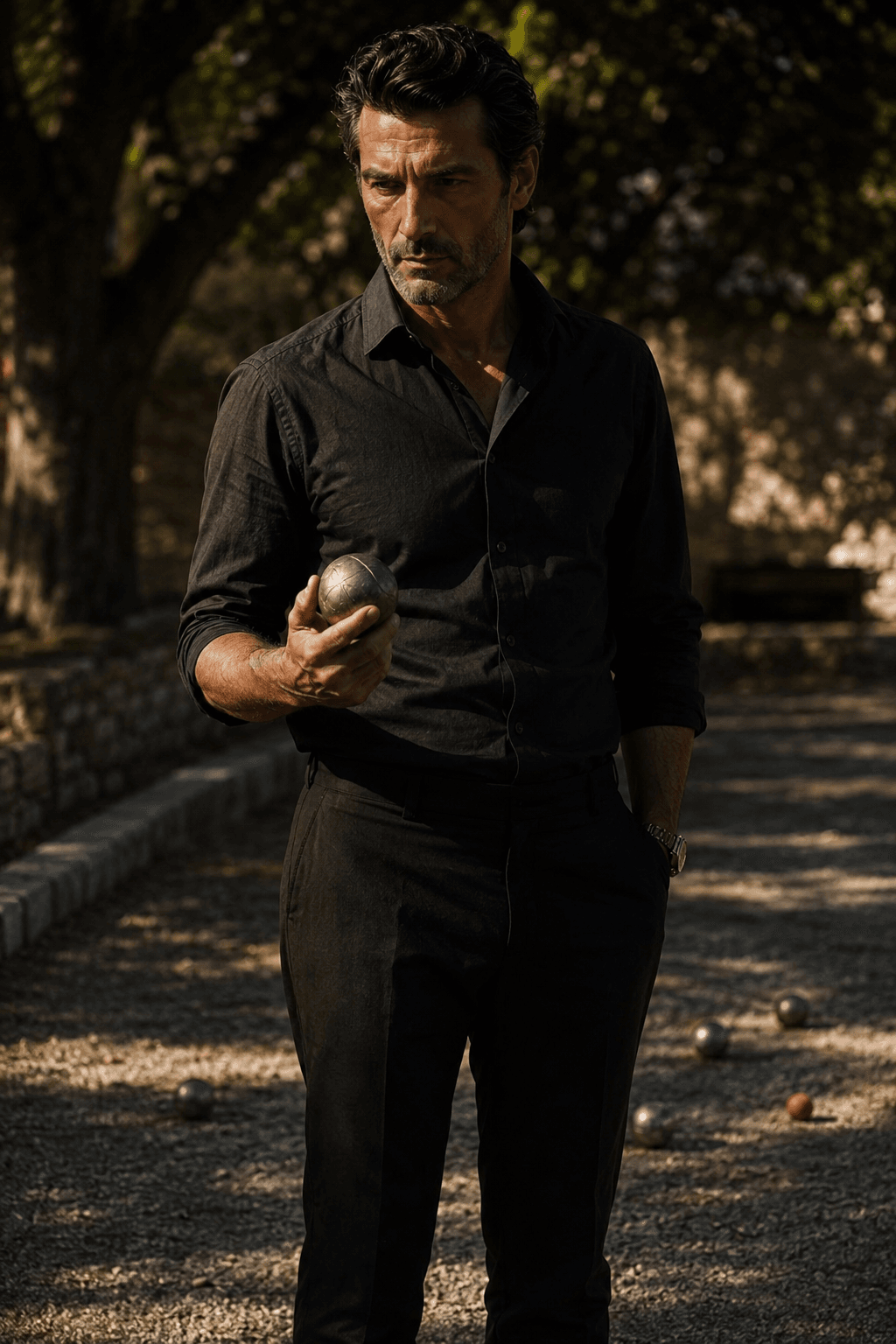
Bluffing in pétanque isn't lying about a rule or cheating on a measure: it's masking a real emotional state — the doubt before a difficult shot, the worry over a tight score — behind a calm, almost indifferent attitude. The stated aim is to let nothing show to the opponent, who could otherwise adjust their pressure accordingly.
It's therefore a bluff of posture, not of cheating. It plays out in the stride, the pace of play, the tone of voice — never in the result of the boule, which remains, itself, totally honest.
Essential distinction: bluffing in pétanque concerns the displayed emotion, never the game itself. A missed boule stays missed, whatever face you show when playing it.
2.What bluffing can really bring
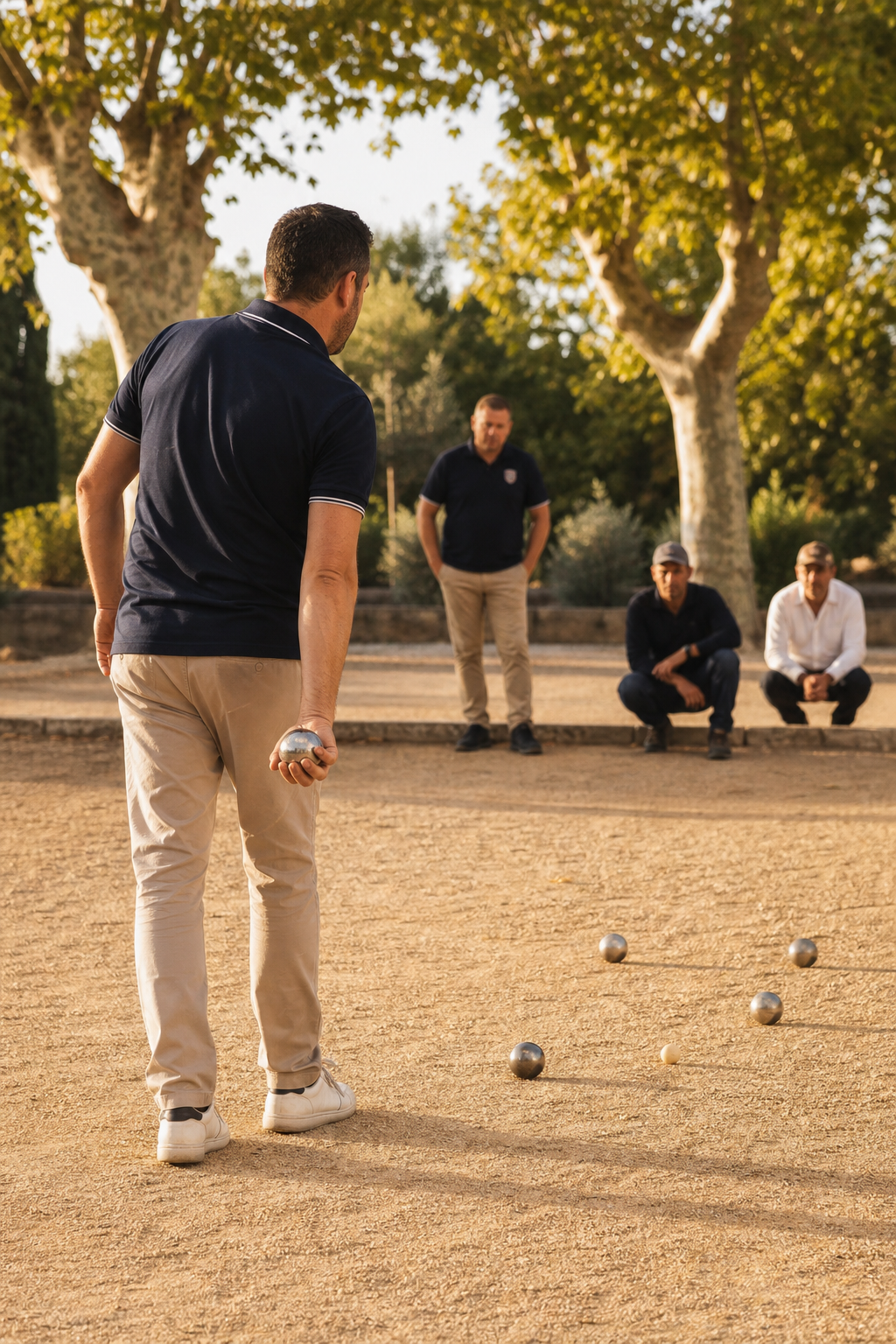
Used in moderation, bluffing has a real tactical value: keeping a neutral face after a missed boule avoids giving the opponent free information about your mental state. Similarly, showing serenity on an unfavourable score can sow doubt in an opponent who expected to see you crack — and sometimes push them into a management error.
3.Where bluffing becomes useless, or even counter-productive
Bluffing quickly reaches its limits. An experienced player reads the real tensions — breathing, pace, repeated gestures — far better than a frozen face can hide them: an overdone bluff then becomes more visible than a well-managed sincere emotion. Worse, focusing on the image you project distracts from the essential: reading the pitch and the gesture. Bluffing that takes over from concentration fools no one, except yourself.
Never try to "play" confidence: build it, through a stable routine before each boule. A genuine serenity, even partial, is always more convincing — and more useful for your own game — than a perfectly executed bluff.
4.The real difference: bluffing the opponent or reassuring yourself
There are two very different uses of bluffing. The first targets the opponent: letting nothing show so as not to give them information. The second, more frequent than you'd think, actually targets yourself: convincing yourself you'll succeed by playing a role. This second use is risky, because it rests on an illusion — and collapses at the first missed shot, leaving the player more helpless than before.
5.Mastered bluff vs forced bluff: the gap in numbers
Let's compare, over a series of mènes under pressure, the impact of a well-mastered neutral posture versus a forced bluff, under constant tension:
| Situation | The right reflex | The common mistake |
|---|---|---|
| Missed boule | Neutral face, without excess | Forced smile too visible |
| Unfavourable score | Calm built through the routine | Playing a confidence role |
| Final pressure | Focus on the gesture | Focus on the projected image |
6.What works better than bluffing
Rather than "playing" an emotional state, it's better to actually build it, through simple and repeatable routines: a breath before each boule, a constant pace of play, a quick check of the score to stay lucid rather than reassured. It's this authentic stability, and not its imitation, that lastingly unsettles an opponent. To go further on mental management, check out our free tools and our page little-known rules.
Building genuine serenity rather than simulating it: the complete guide to managing your emotions under pressure and staying lucid, without ever needing to bluff.
📗 Discover the book